

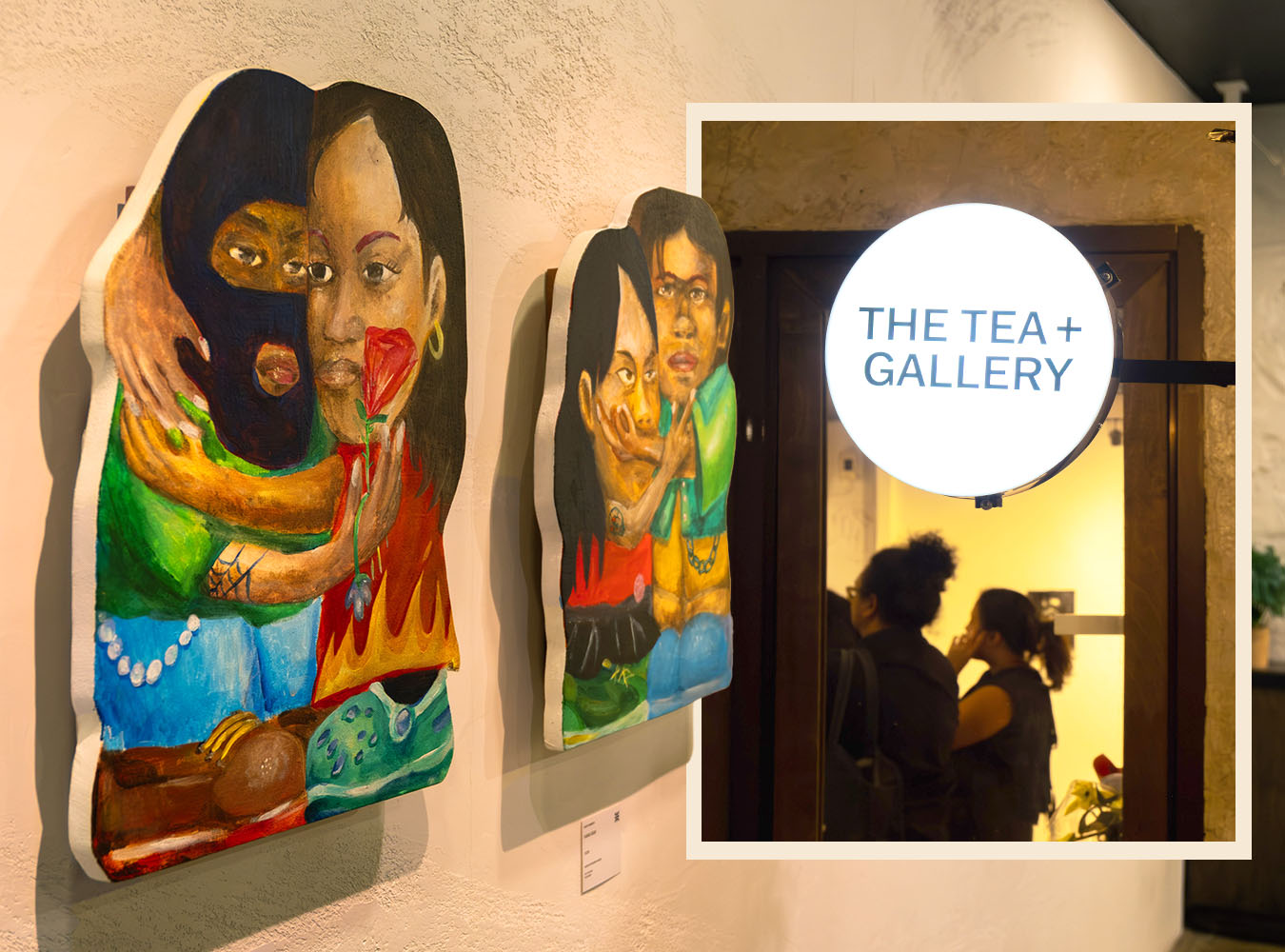
There is a kind of discomfort that doesn’t push you out the door, and doesn’t let you stay in peace either. It sits somewhere in between. That is where This Discomfort is Not Resentment begins at The Tea + Gallery.
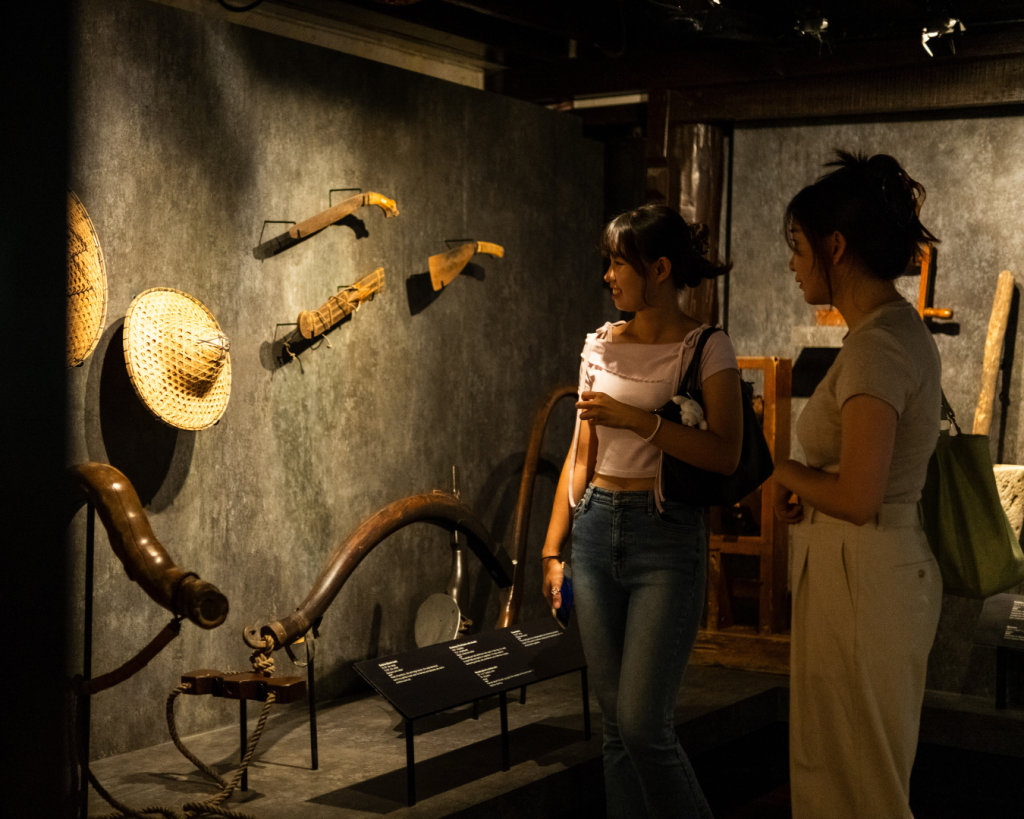
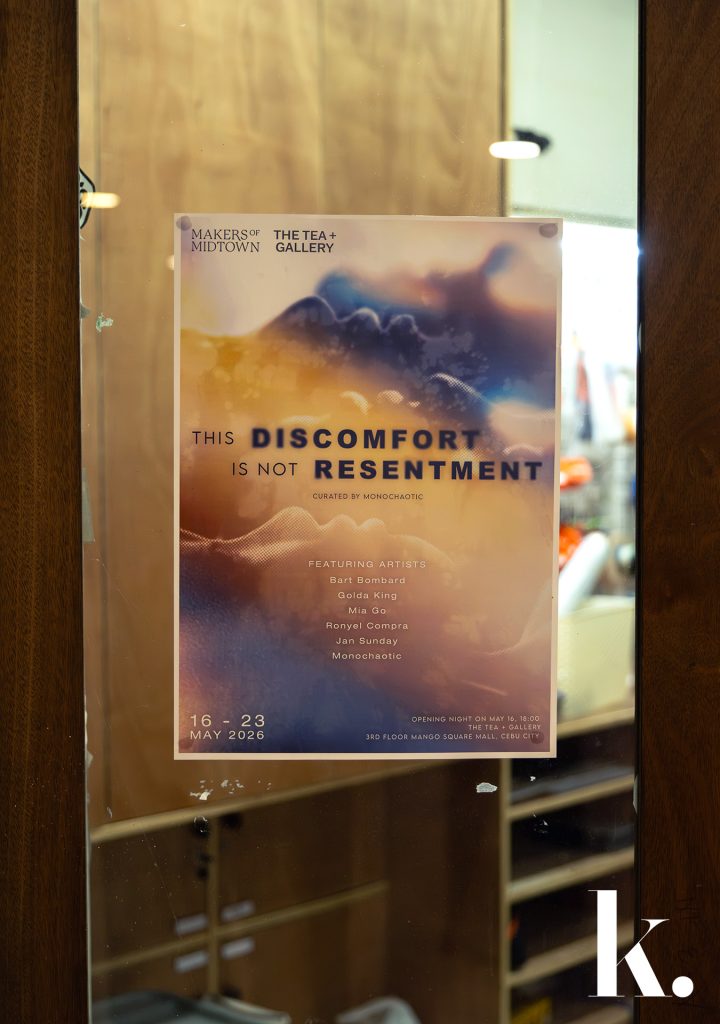
The group exhibition, curated by Monochaotic, opened on May 16 and runs until May 23 on the third floor of Mango Square Mall. It features works by Cebuano artists Monochaotic, Golda King, Jan Sunday, Mia Go, Bart Bombard, and Ronyel Compra.
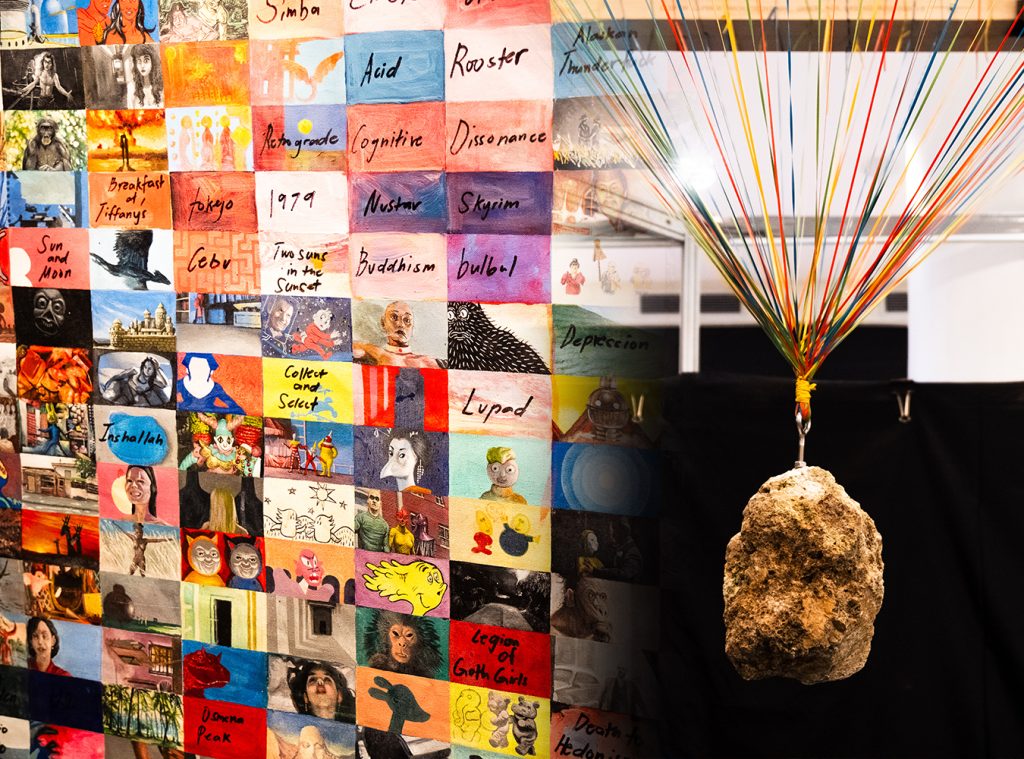
Through paintings, assemblages, and mixed-media works, the group show asks a question many Filipinos consider: “If the discomfort of staying and the discomfort of leaving are the same discomfort, is this love, or have we just made peace with it?”
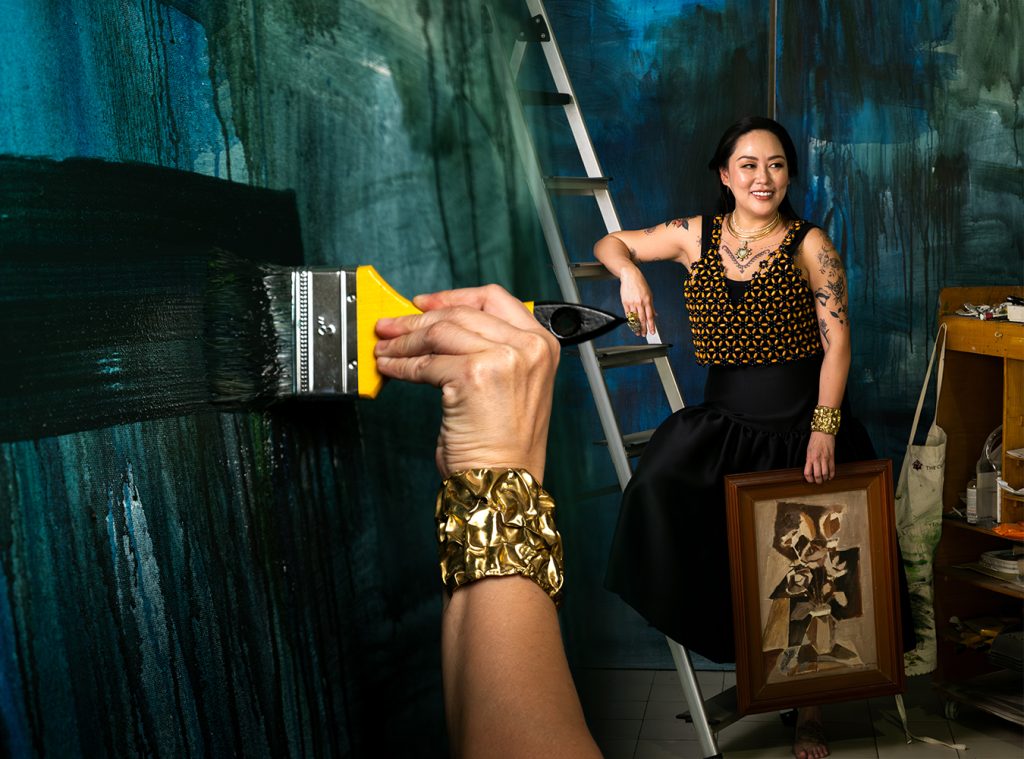
For Monochaotic, the working alias of Cebu-based artist, educator, and curator Jude Crisostomo, the eight artworks express frustrations with the political, economic, and social realities many Filipinos struggle with, while also recognizing the emotional ties that make leaving difficult.
“We can never really solve everything in this situation,” he said during the opening. “So this is an open discussion. Let’s talk about it. Or we can stay silent and just let our thoughts talk to each other.”
According to Monochaotic, the project began with personal reflection. He is known for art based on observation and photography, but this was the first time he intentionally included politics, social problems, and economic issues in his work.
Realizing he could not have this conversation by himself, he invited other artists to respond to the same theme: the emotional struggle between staying and leaving.
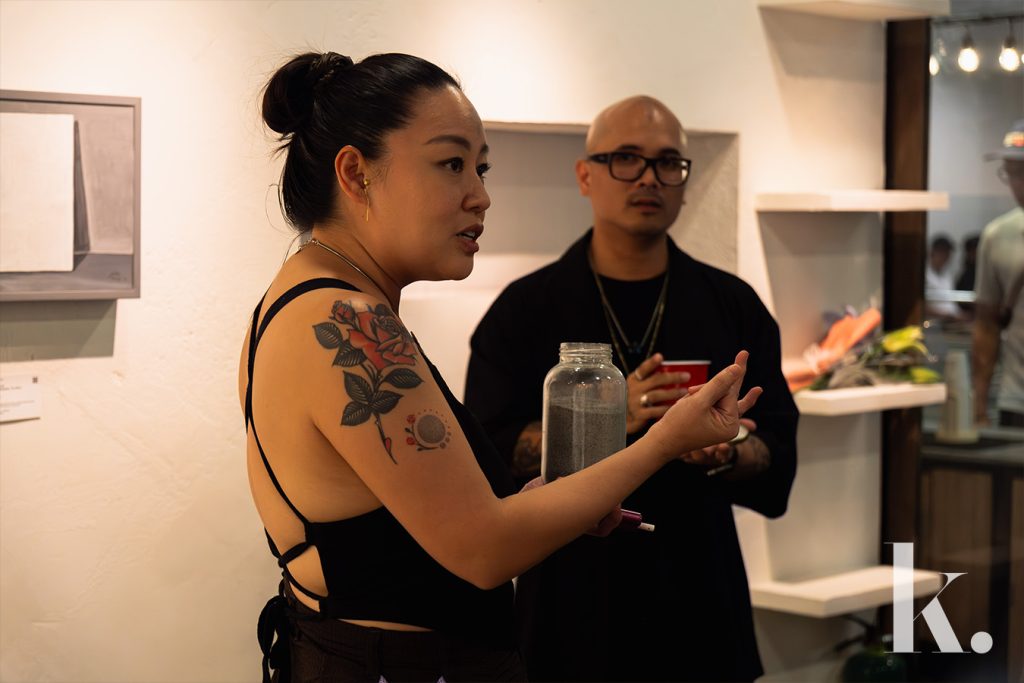
“Luckily, many of them already had works that connected to the theme. Some even created new ones for the show,” he mentioned.
Artists in Their Own Discomfort
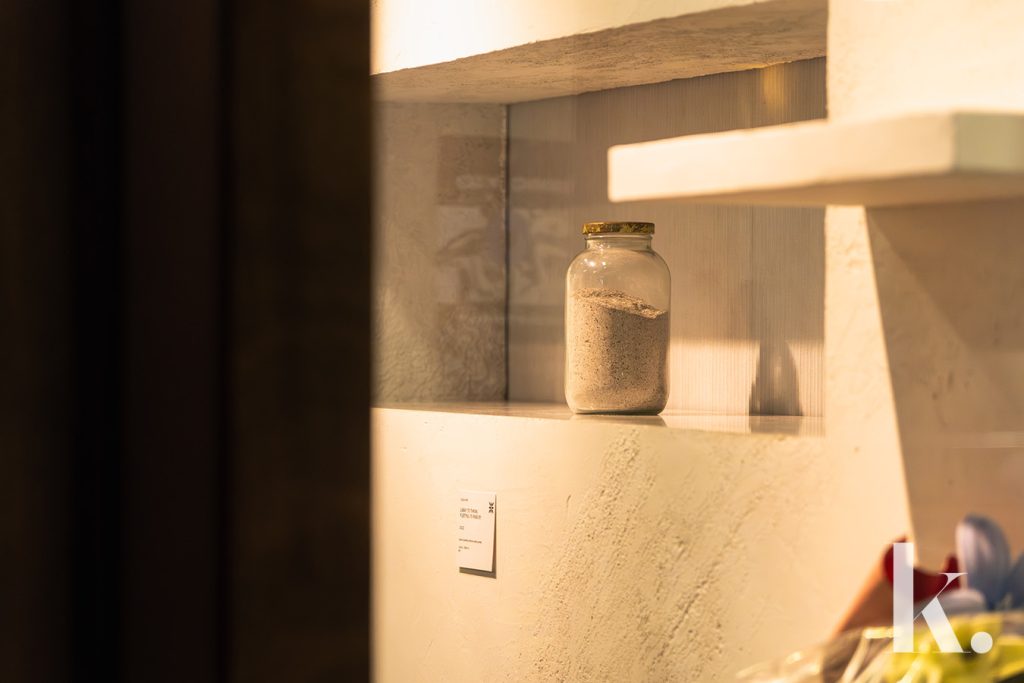
Among the featured works are Golda King’s Pabilin (To Remain, To Stay) and Labay (To Throw, Fleeting, To Pass By). Both pieces use ashes from burned paintings, journals, sketches, and studies. What began as an exploration of creative block slowly became a reflection on what it means to remain in discomfort without fully letting it go.
Mia Go’s mixed-media piece Rebirth looks at the burden of staying in a country that asks a lot from its people but gives little back. Still, the work holds onto hope, showing that people keep putting parts of themselves into the futures they want to build.
Monochaotic’s work, Monobloc, uses cyanotype paper and an assemblage on canvas to turn the familiar plastic monobloc chair into a symbol of everyday Filipino life. He described the chair as uncomfortable, noisy, and very common, but also closely tied to daily life and memories.
“I have sat on a monobloc chair more times than I can count,” he wrote in the artwork label. “It’s one of the most uncomfortable chairs I’ve ever used. And yet in the Philippines, it’s where I’ve done most of my living. When I was living abroad for a year, I barely sat on one.”
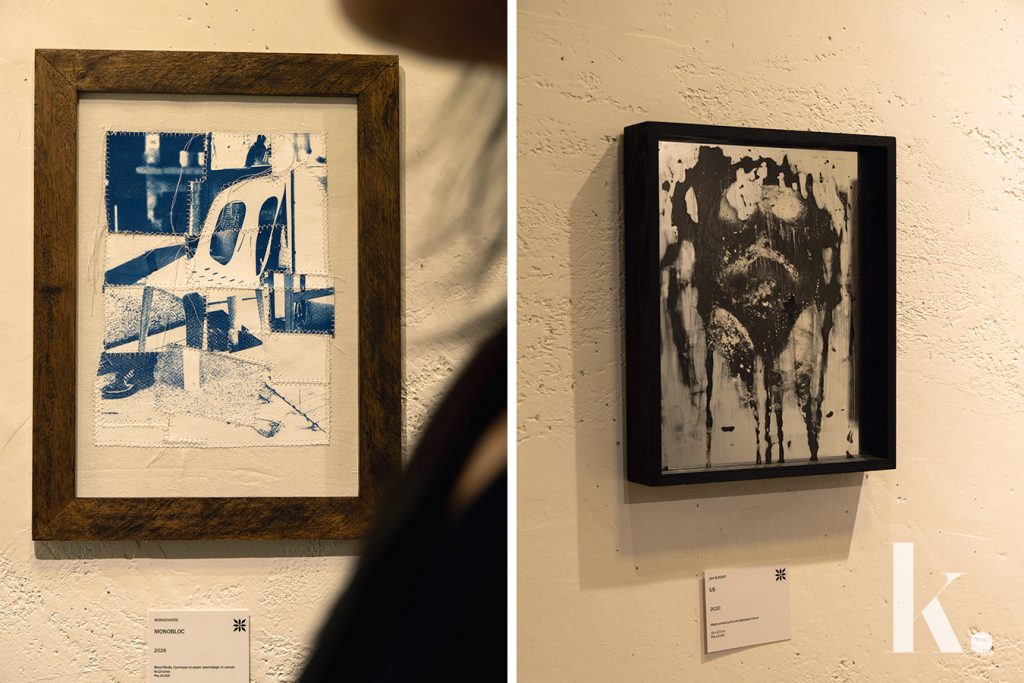
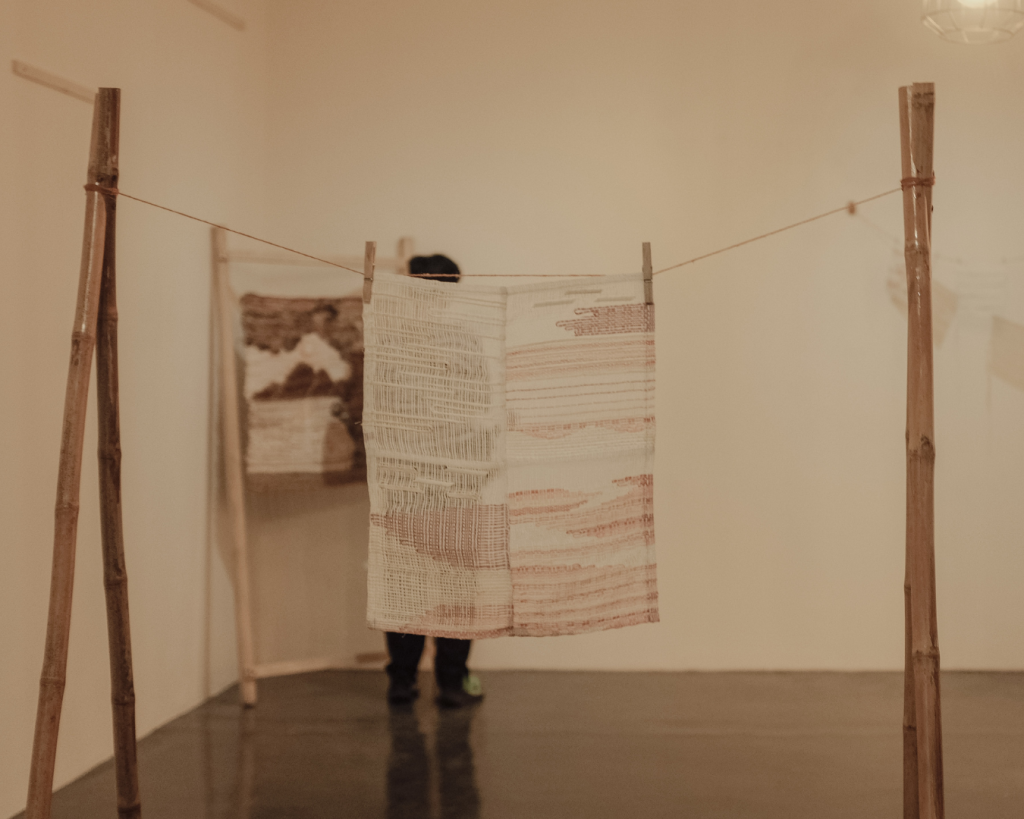
Us by Jan Sunday combines a matte archival print with a distressed mirror to explore ideas of duality, interdimensionality, and “alternative histories.” By looking at both the front and back of found tapestries, the work shows how different perspectives can exist within the same fabric or memory.
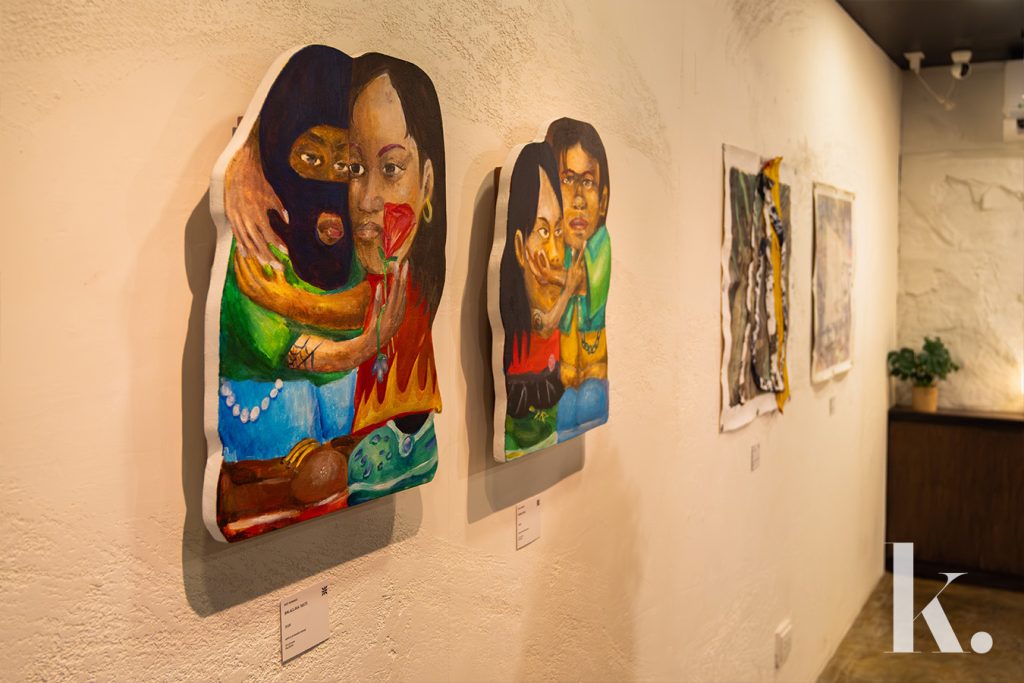
Bart Bombard’s shaped-canvas paintings, Baclava Taste and Hand Sign, depict figures who are both protectors and aggressors, lovers and fighters. The works reflect on how tenderness can survive in struggle, and how beauty can come from conflict.
Ronyel Compra’s Envy and Light, an assemblage of oil paint, textiles, and found materials, draws on memories of his grandmother’s home through soil rubbings and imprints. His work, Southeast-Siocon, created using sgraffito on gessoed canvas and featuring an image transfer of site-specific basketball hoops, reflects on the colonial legacies of imposed sport and spatial remapping.
Curating Through Uncertainty
For Monochaotic, curating the exhibition brought its own challenges.
He admitted that one of the biggest challenges was balancing his roles as both curator and exhibiting artist. He also felt pressure working with respected contemporary Cebuano artists whom he considers “top-tier” practitioners.
“At first, that was intimidating. Not every curator gets the chance to work with artists like this,” he said.
Beyond the ideas, the exhibition also required a lot of hands-on work: organizing the show, making new art, managing the gallery, and inviting audiences to join the conversation.
Despite the pressure, Monochaotic felt the process was worth it because it let artists express feelings that are often left unsaid.
“We use our talent to show people what we feel and what we think,” he said.
The exhibition also marked a new chapter for The Tea + Gallery, which was recently renovated to support contemporary art while remaining accessible to both new and established artists.
“Not something intimidating or snobbish, but an alternative space where conversations can happen,” he added.
Monochaotic also noted that exhibiting work in a newer, less established gallery alongside younger artists can feel “uncomfortable” in itself, even for well-known practitioners. But perhaps that discomfort is what makes these dialogues flow within the artistic space.
Photography Kyrra Kho