



When someone asked the ancient Greek philosopher Thales of Miletus what the hardest thing in life is, he reportedly answered: to know thyself.
A good, quotable answer like this always comes from a good question. In our endless quest to know ourselves, we must keep interrogating the parts we’re sure we already understand, like our personality traits.
But could some of what we think are our personality traits actually just be coping mechanisms?
For Elian del Mar, a psychology graduate from the University of the Philippines Cebu, set to be sworn in as a licensed psychometrician this October, both personality traits and coping mechanisms capture a pattern in a person.
“A coping mechanism could be argued to be a manifestation of a personality trait,” he said, “and thus a piece of the larger forest of an individual’s personality.”
Picture it this way: the forest stays the same no matter which trees come and go. Our personality traits, Del Mar clarifies, are relatively stable, while coping mechanisms can eventually be unlearned.
The trouble is that a tree planted by circumstance looks exactly like one that was always there. And the traits people compliment us for are often the ones we never think to question. So let’s start with the one that gets the most applause.
The Overachiever
Trust me, I tried to find a modern example. Michelle Obama, Jennette McCurdy, and Michael Phelps have all spoken about what it costs to build your life around achievement: Obama as a lifelong “box checker,” McCurdy as someone who acted to please her mother, and Phelps as someone who saw himself as only a swimmer. But I kept coming back to a man who put that feeling on paper two centuries ago.
You probably know John Stuart Mill from school for his harm principle and influence on utilitarianism. He was a precocious child, a prodigy. At three, he learned Greek. By eight, he was reading Herodotus and Plato. Somewhere in that brilliance, he landed on an ambitious goal to work toward: reforming society by changing its laws, political systems, and the way people think so the world would improve.
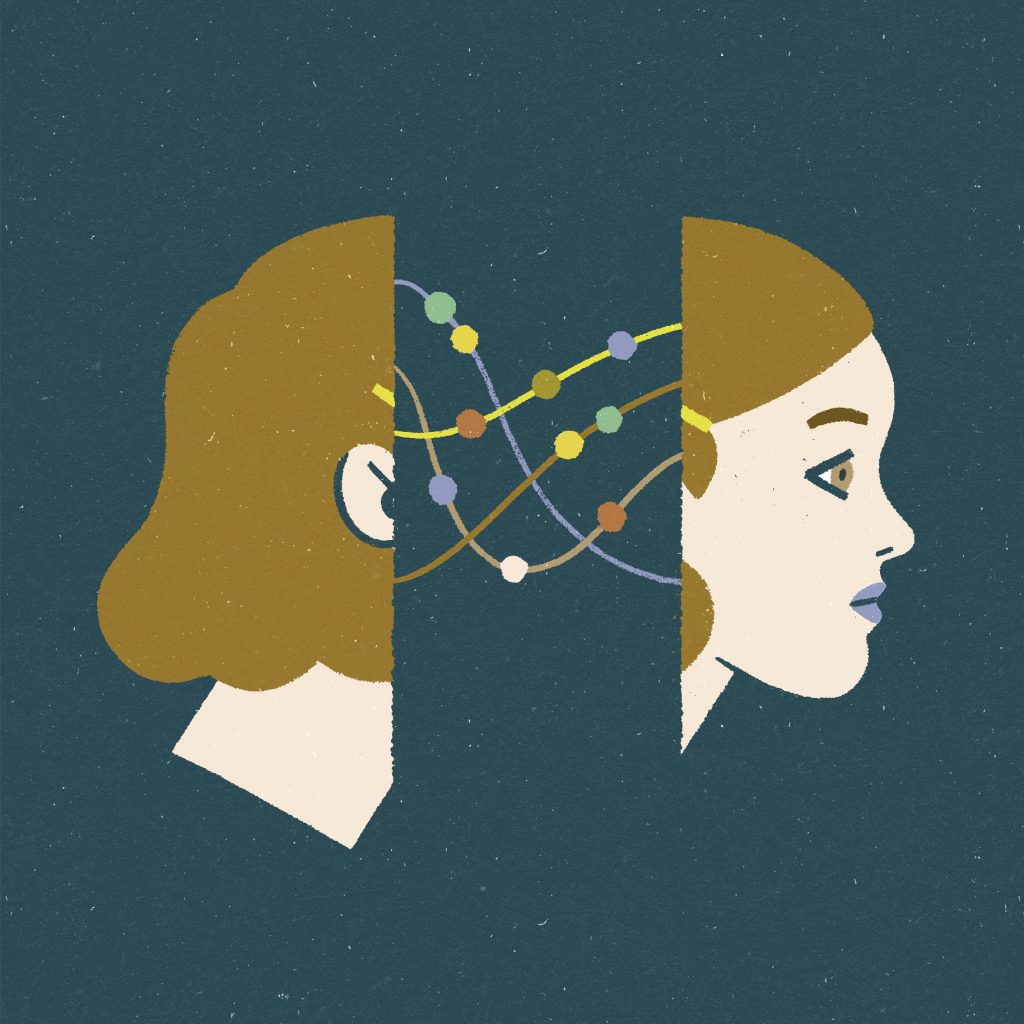
In his autobiography, aptly titled Autobiography, he shows how that drive failed him.
In the fall of 1826, he asked himself whether he’d be happy if that goal were fully achieved, and the answer was a big fat no. Until then, he had staked his happiness and sense of purpose on pursuing it. Once it lost its charm, he wrote, he seemed to have nothing left to live for. In the months that followed, “the cloud seemed to grow thicker and thicker.”
Nobody then would have called this a coping mechanism. The word for a young man like Mill was genius. That’s how overachievement usually gets read: as personality, not as something holding a person together.
So if you’re the one everyone calls driven, it’s worth asking what you’d have left if the goal were met tomorrow.
Miss Independent
It’s why Ne-Yo fell for his girl, right? Because she’s Miss Independent.
You may already think of overdependence as a coping mechanism, but what about the opposite? Social media often pairs the word “independent” with “strong,” so it’s easy to believe the trait is only ever commendable. But what if it isn’t?
Take Andrei*, for example, a 23-year-old corporate professional who lives by himself in a condo next to his Makati office. “If I can do something myself, I’d do it myself,” he told me.
Ever since he was younger, he’d built a wall between himself and other people, doing his best never to get too close. Why is that? I asked him.
“Maybe they’ll think I’m weird,” he told me. “Just like my family did.”
He assumed it was a gene jump, being the only introvert in a family of extroverts. His parents didn’t understand it. His sister, a few years older, was an extrovert like them. “They think that [being an extrovert] is the only personality trait,” he told me. “They thought I was weird for that.”
Del Mar says our coping mechanisms often point to what we lacked as children. For Andrei, that may be the simple experience of being accepted as he is. Online, “healing your inner child” is usually sold as something to buy: we shop, we drink, we travel. But sometimes we don’t heal our inner child. We outrun him.
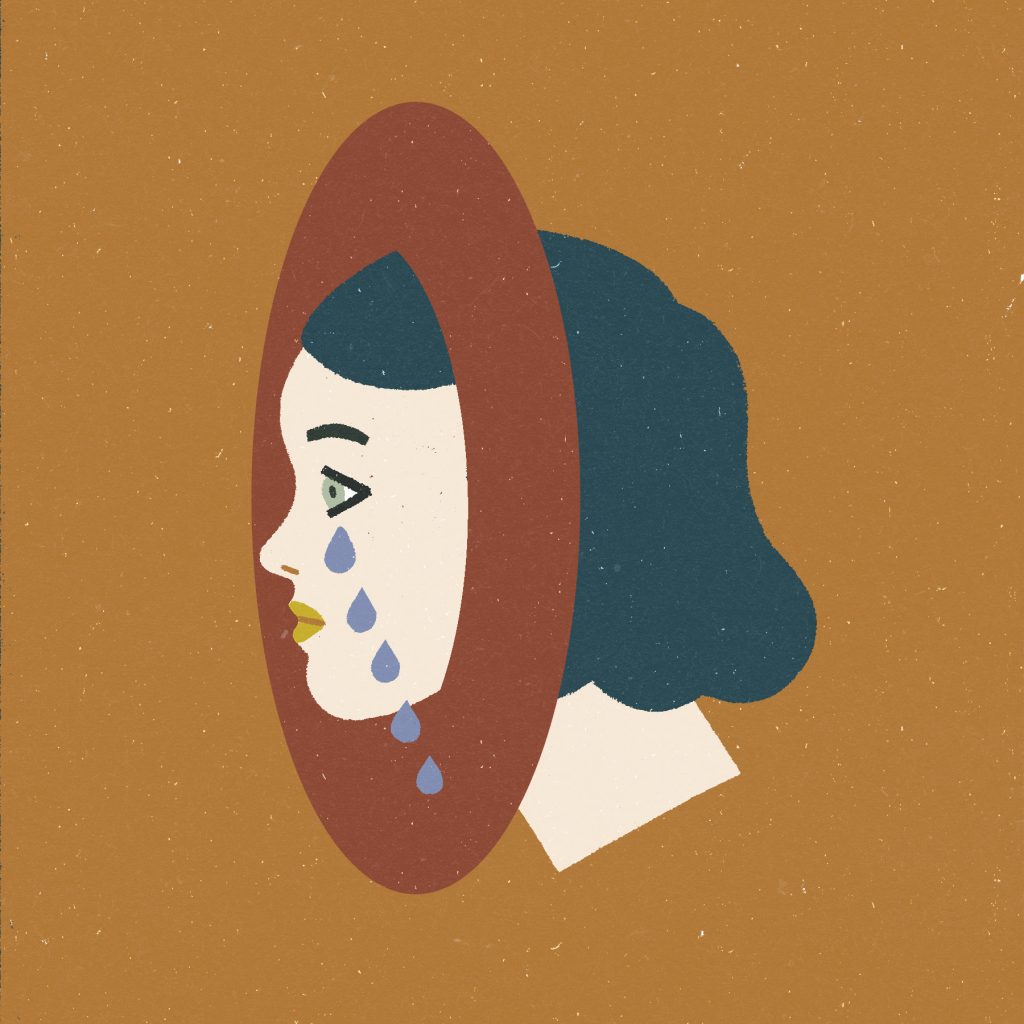
Andrei told me there are “so much unknown factors” when you depend on other people. He likes certainty, especially the certainty that he’ll never let anyone down. So he does things himself, and no one can call him weird, and no one can disappoint him.
Yes, you can be proud of building your wall brick by brick, all on your own. But it’s worth asking who you’re keeping out by keeping it up.
The Joker
Every funny person knows that the funniest person in the room isn’t the happiest, however happy they make everyone else.
There is an Iñigo* in your life, you know it. A few things about him: 24 years old, brown eyes, dimples when he smiles, and funny. Everyone thinks so. At a recent team-building event, everyone described him as just that. “Funny.”
“Sometimes I feel like it’s not me making these jokes,” Iñigo told me. “Sometimes I treat Iñigo as a character. ‘Oh, this is what Iñigo would say; this is what he’d do.'”
What would the ‘actual you’ do? I asked him. “I really just want to shut up,” he replied. But? “But I don’t want people to ask me questions.”
Questions mainly about who he really is and what he really feels. That made him a little difficult to interview, because I watched him deflect each question about himself. It was also a point of conflict with a past partner, who had to ask him to stop joking and answer seriously for once.
Possibly, for Iñigo, honesty is the stressor. Del Mar describes coping mechanisms as “our body doing its regular functions.” We all react to stress differently: some fight, some fly, and some fool.
The trouble is that it works. At the team-building, everyone gave the same one-word answer, and no one asked anything more. That’s exactly what Iñigo wants, and exactly what keeps him from being known.
So the next time the Iñigo in your life makes you laugh, it’s worth wondering what truth the joke is masking.
The Big Question
Which brings us back to Thales and the hardest thing in life. Knowing yourself may start with sorting out which parts of you are really you, and which parts are armor. Del Mar leaves us with this question:
“Maybe some of us need to ask, does this coping mechanism really show who I am, or is there a version of me that does not need to cope with something?”
Note: Some of the interviewees’ names have been withheld upon their request to protect their identity and privacy.