



“It’s just an internet thing,” one Redditor posits in a locked post in r/FilipinoHistory pondering the origins of the feud between the Tagalogs and the Bisayas. Search the internet, and you’ll find a number of “rambulan” Facebook groups where Bisaya and Tagalog speakers trade jabs, each side retaliating in turn.
These groups are an internet phenomenon, sure. But don’t they reveal something beyond the screen? Because offline, the truth looks different. People aren’t vehemently fighting in defense of their culture. They’re apologizing for speaking a language the other might not understand. A quiet game of who, in a conversation between Bisaya and Tagalog, caves first.
The Bisayas usually do. Why is that?
‘Imperial Manila’
Let’s get the most obvious reason out of the way: the language difference. Filipino linguist Andrew Gonzalez studied the Bisaya-Tagalog tension in the 1980s — long before Facebook was a thing. In his piece “Cebuano and Tagalog: Ethnic Rivalry Redivivus,” he submits that language became “the symbolic form of resistance to Tagalog domination and imperialism.”
What Filipino teachers will tell you is that our national language is an amalgamation of Philippine dialects. But even you know that’s barely true. Tagalog makes up most of Filipino — hell, Spanish makes more of an appearance in Filipino than any other Philippine dialect.
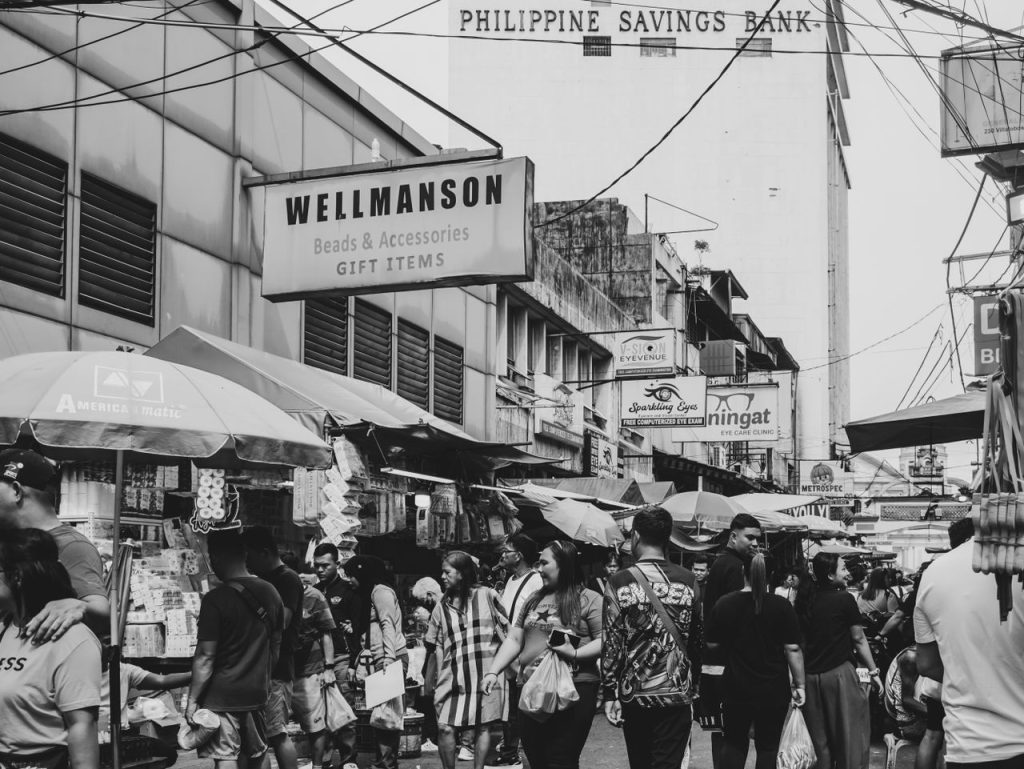
Photo: Pexels / Kimy Moto
Was the decision spurred by what the majority could speak? Probably, but also probably not. Our second Philippine president, Manuel Quezon, proclaimed in 1937 a national language based mainly on Tagalog because, for one, he claimed it was the most developed of all the existing languages in the country, and for another, it was Rizal’s native tongue.
In a 1960 census, however, it was revealed that Cebuano was the most widely spoken language in the country, well ahead of its runner-up, Tagalog.
But Gonzalez says that Cebuanos never objected to Tagalog-based Filipino as a practical lingua franca. Instead, their objection was how it was being touted as a national symbol of unity. This, Gonzalez theorizes, “implicitly demotes Cebuano to second-class status.”
Being relegated to “second-class status” was one of Darlene Ranoco’s fears before embarking on a four-year journey to Manila. She’s a recent graduate from Ateneo de Manila University, born and raised in Consolacion, bringing her Bisaya pride to the imperial city.
Because she was proud of her heritage, she didn’t actually have to apologize for speaking Bisaya. Sure, there were the occasional accidental utterances of Bisaya words in the palengke, ones she had to blushingly translate to Tagalog after some puzzled looks. But she was always able to stand her ground with the groups of people she met in her university.
What she had to watch out for was her accent — because those around her were already watching for it first.
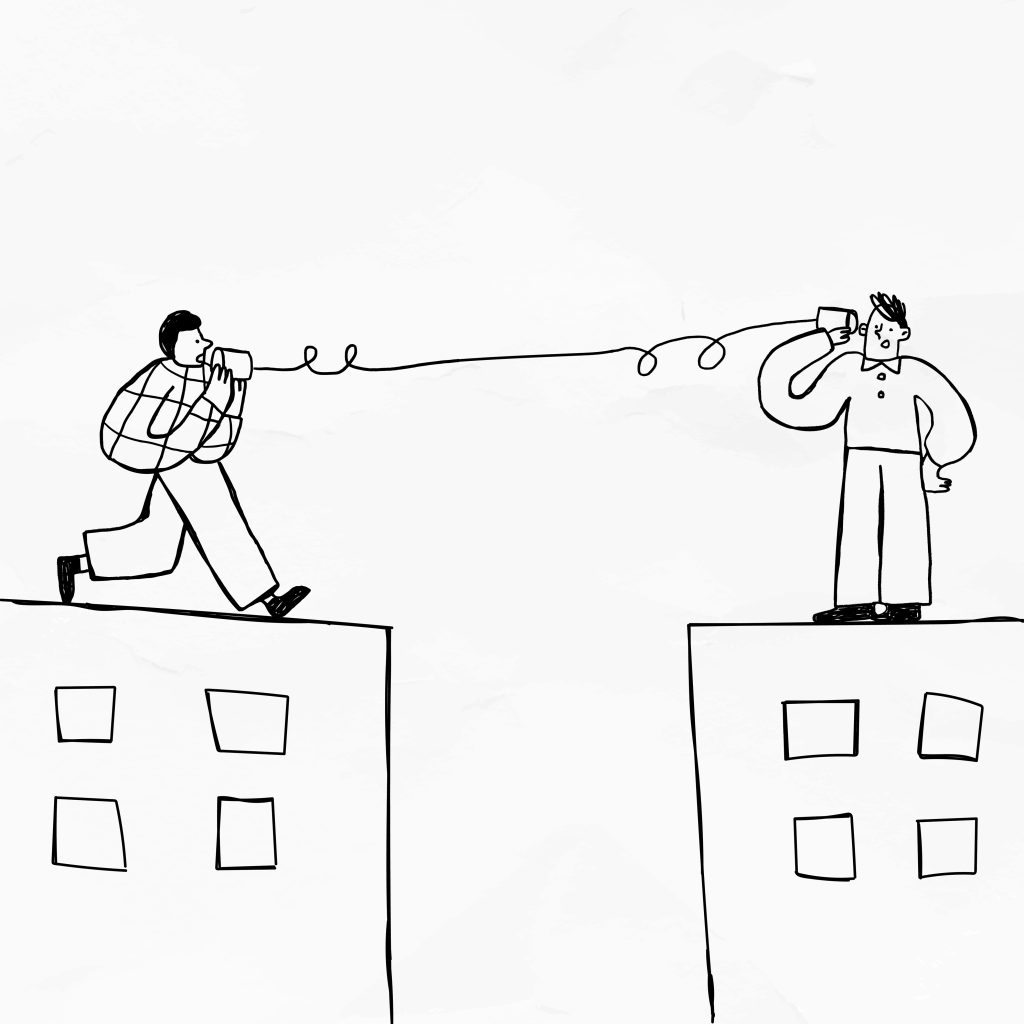
Men talking with cup telephone while in social isolation vector
Trisikol?
“The moment I speak Tagalog, they ask where I’m from,” Ranoco said. “I tell them I’m from Cebu, and the conversation would lead to my accent. Mabigat daw.”
She emphasizes that they weren’t mocking her; just curious. But the accent does underscore the divide between the Bisaya and the Tagalog, and this forms the second level of this discussion: accent shaming.
Bukidnon State University professor Iris Ramirez puts it plainly: “The Bisaya language is often used…when someone is trying to make a person laugh by mimicking the native accent.” She continues later on that when a Bisaya person mispronounces a Tagalog word, they are often met with a “burst of laughter” from a Tagalog speaker.
Ranoco’s mispronunciations weren’t met with bursts of laughter, but they did invite questions. Because of that, she was always careful not to speak in Tagalog when she wasn’t confident about it. Often, she’d speak in English to avoid Tagalog, but that invited its own commentary.
“I could say my thoughts [more] confidently in English than in Tagalog,” Ranoco said. She expressed her internal monologue when people made fun of her for that: “I’m sorry that you need English because I would have to say it in Bisaya, but then you wouldn’t get it.”
Bisaya plays with the vowel sounds, turning “i” into “e” and “u” into “o” — “gamot” leans into “gamut,” “tricycle” edges closer to “trisikol.” It’s a subtle shift, but subtle enough to be noticed, and noticed enough to be commented on. “Mabigat” is what Ranoco’s friend used, as though the accent is something dragging the sentence down, something to be smoothed out before it could be taken seriously.
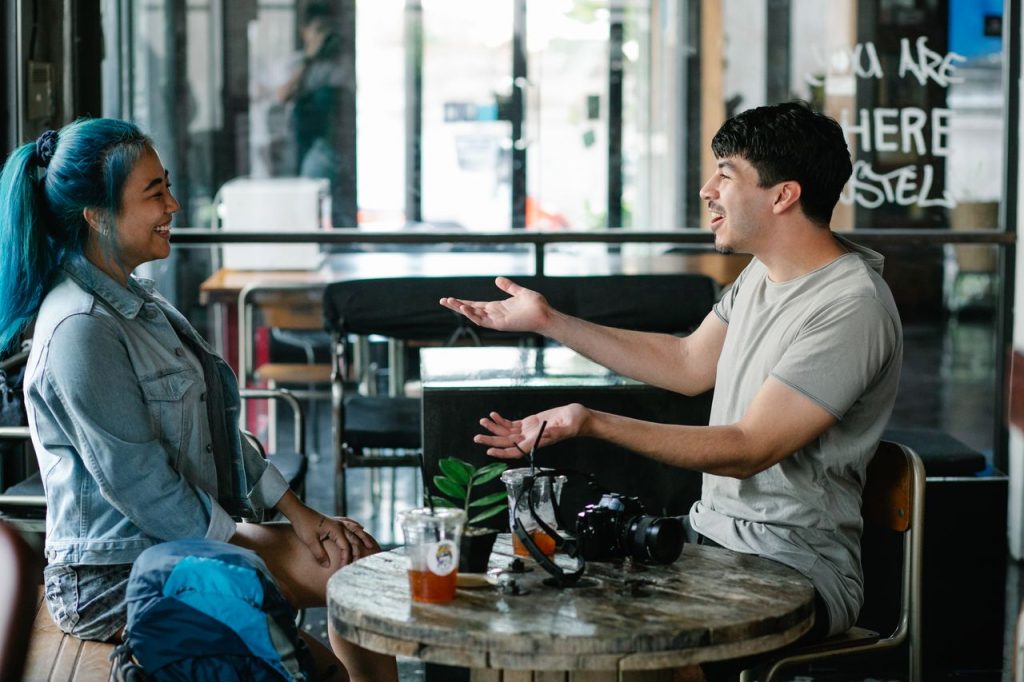
Photo: Pexels / George Pak
Ranoco has never been the butt of any specific joke, but does it matter? Her heritage, which she so proudly wore on her sleeve, was being mocked, often using the stereotypes that go with it: that they are second-class because they wear this, eat this, or voted this family into power.
“I don’t support what is happening because it’s causing a divide. Let’s not reinforce that division,” she said. “Visayas and Mindanao want to be represented, but this is not the way.”
What is the way then? Well, Ranoco spent a few years in Ateneo forming it.
Kanang…kuan…
She founded Katipunan Uban sa mga Ateniyang Nagkahiusa (KUAN), an organization in Ateneo dedicated to promoting Visayan-Mindanaoan culture.
The club was met with immediate fanfare. “[Our members] were happy they’ve found a fellow Cebuano or fellow Ilonggo [through KUAN]. They finally get to speak the language they’ve been suppressing for so long,” Ranoco mused.
They felt at home, she shares, and that extended far beyond just language. KUAN hosted events that taught about VisMin culture: inviting indigenous communities from the regions to teach about the importance of music and dance in religious worship, giving a platform to families of victims of Martial Law from Visayas and Mindanao to share their loved ones’ stories.
A lot of the participants in these events were actually from Luzon. People who wanted to know more about the traditions, the languages, and the struggles. They attended because they wanted to relate better with a friend, a classmate, a distant family member. KUAN provided them the opportunity to do just that.
When talking about the undercurrent of regionalism, Ranoco says she feels offended, not just as a Cebuano, but as a Filipino.
The Philippines is an archipelago, fractured into thousands of islands, and each island reflects a unique identity, usually in the language and the accent. But we all bear the same face. We are a country historically built on suppression — colonized, silenced, told which language counted and which didn’t. Why must we continue that cycle among ourselves?
The sooner we get to a point where we don’t have to apologize for speaking our own rich, unique, and beautiful languages, the better.