

Bayot.
It’s a word that takes space no matter where it’s found. You can count its number of letters in one hand, then fashion that hand into a gun to signal its effects.
It has broken families and friendships while simultaneously bringing communities together and signaling rebirth and growth.
It’s a word that has to be confronted head-on, in order to destigmatize it, render it powerless, then reclaim it.
What’s in a name?
Francis Luis Torres, an assistant professor at the University of the Philippines Cebu, has spent a good chunk of his academic career dissecting bayot, tracing its origins, and unpacking its evolving meaning.
“The term was clearly used to undermine men who do not conform to heterosexual and patriarchal notions of manhood,” he said, citing the earliest iteration of the word he found in his research. It was in a 1916 newspaper clipping. There was an article published in the Bag-ong Kusog paper about a woman who wished to separate from her husband because he could not fulfill his duties as a husband and as a man — they called him a bayot.
There was no explicit mention of what these duties are, Torres clarifies, but the article was clear in its delineation, drawing the line between the regular man and the bayot.
For Zac (not his real name), the earliest he had heard the word was when he was seven years old. It was during recess with his friends, and they were talking about a classmate of theirs who appeared more feminine than the rest and aligned more with girls.
“‘Basin bayot na siya,’ they would say, laughing,” Zac recalled. “My friends weren’t bullies, but I knew from the way they were saying that word that I wouldn’t want them to call me that.”
It’s been almost a year now since Zac made it out of school, having graduated from a university in Manila with Latin honors, but the politics of the classroom still gets to him from time to time. He lives a generally out life. All of his friends know about his sexuality; he’s gone on dates with a few guys here and there. But he’s still not out to his family.
“It’s hard because they were the ones using the word bayot a lot,” he said. “If a gay man went to the moon, my parents still wouldn’t see them as successful. Because they’re gay.”
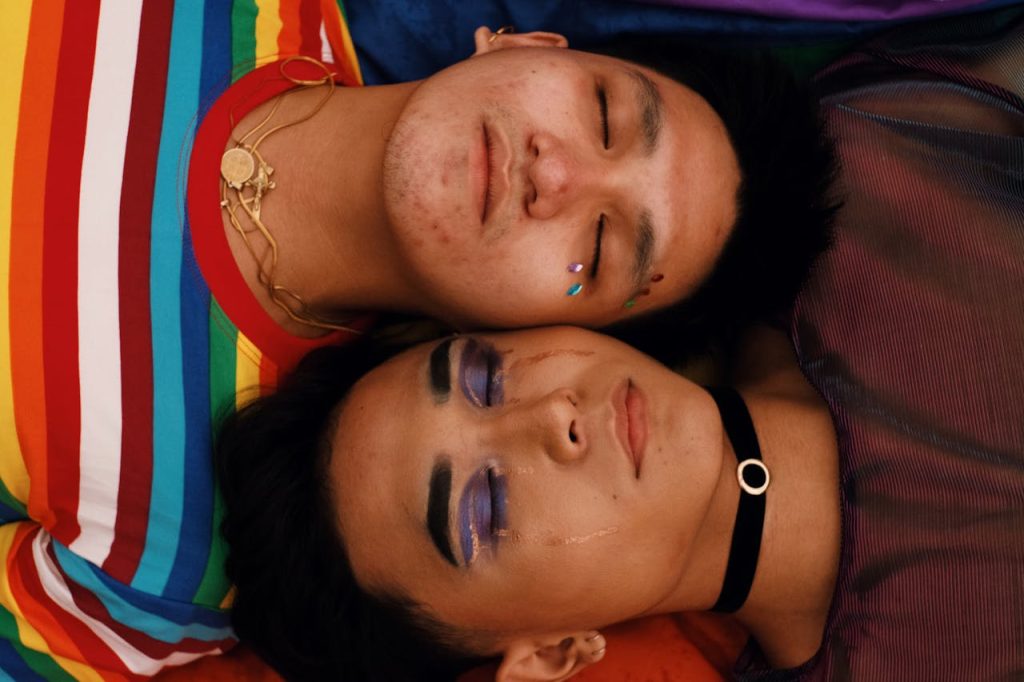
Photo: Pexels / SLAYTINA
Vice Ganda was the first person that came to his mind when asked for an example.
Historically, the bayot appears in media as a comic figure. For Zac and his family, Vice is the funniest bayot of them all. Whenever his parents caught him on It’s Showtime, they’d roll their heads back in laughter for every joke he cracked.
But no matter how funny Vice is, Zac says they’d never fail to make snide remarks about how he spoke, performed, and dressed.
“It felt like [Vice] was just a bayot who made them laugh instead of a smart, funny person,” Zac said.
In his research, Torres uncovered a Captain Barbell comic strip that features a bayot antagonist. There was the premier macho, metamorphosed from a scrawny nobody to a magical hypermasculine man, going against a campy, feminine, and ridiculous bayot protagonist whose powers stem from witchcraft.
From the get-go, the bayot has been laced with a profound marginalization.
Distinctly Cebuano
For Torres, Cebuano gay identity “pivots around” the word bayot.
“Many Cebuano queer people are called bayot long before they understand their sexual orientation,” Torres said. “Their sense of self forms as a response to that naming. Some internalize the shame, while others build a whole persona around it.”
Zac remains unsure how he responded to it. Almost a decade now since he encountered it, the word has been harshly flung at him, lovingly said, and clumsily claimed as part of his identity. It didn’t help that he moved to Manila, where his friends were familiar with the word but not its gravity.
He recalls a literature class where the text appeared in a required reading, and his teacher, knowing he was Bisaya, asked him to explain what it meant for the unaware.
“I think my teacher wanted a more nuanced explanation, but I just kept saying that it meant gay,” Zac laughed. “I knew even then it was more than that, but I couldn’t explain it.”
Torres says bayot is uniquely Cebuano, carrying a different meaning compared to its Western and even Filipino counterparts. The key difference is in their linguistic origins.
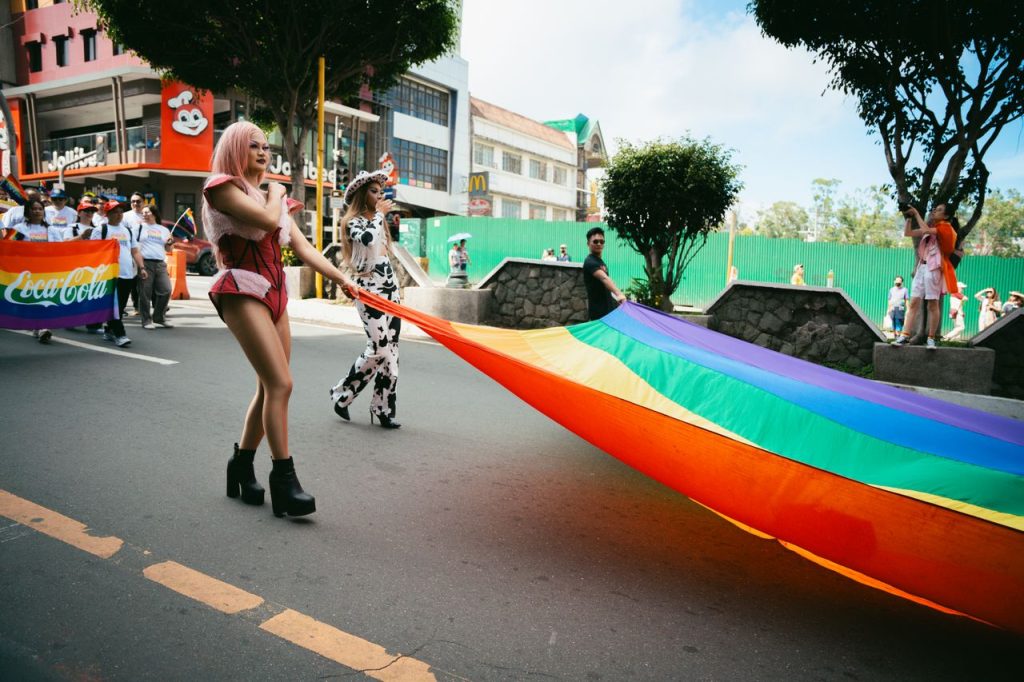
Photo: Pexels / Kenneth Surillo
The term bayot has been said to be a compressed rendering of the phrase “babaye nga naa’y oten.” This means that the word is focused on the biology and psychology of a perceived gender nonconformity. Bakla, on the other hand, was first documented to mean cowardice. Only later was it attached to a specific gender.
The most updated definition of bayot is an effeminate homosexual, blending a person’s gender (their sense of self) and their sexuality (who they are attracted to) into one word. Western discourse has a tendency to separate these (think femme and butch vs. gay and lesbian).
“One can say that the bayot is a unique local identity,” Torres suggests. “It is a Cebuano word for a Cebuano way of organizing gender, and this means it cannot be fully understood without understanding how Cebuanos tease, care for, and place one another in the community.”
Where does the bayot go from here?
As with any word that makes it into the cultural lexicon, bayot has evolved. As queer personalities gain relevance and success, and Cebuano legislation has shown a friendliness every now and then to the queer community, many who once felt scorned by the term are now making strides to reclaim it as their own.
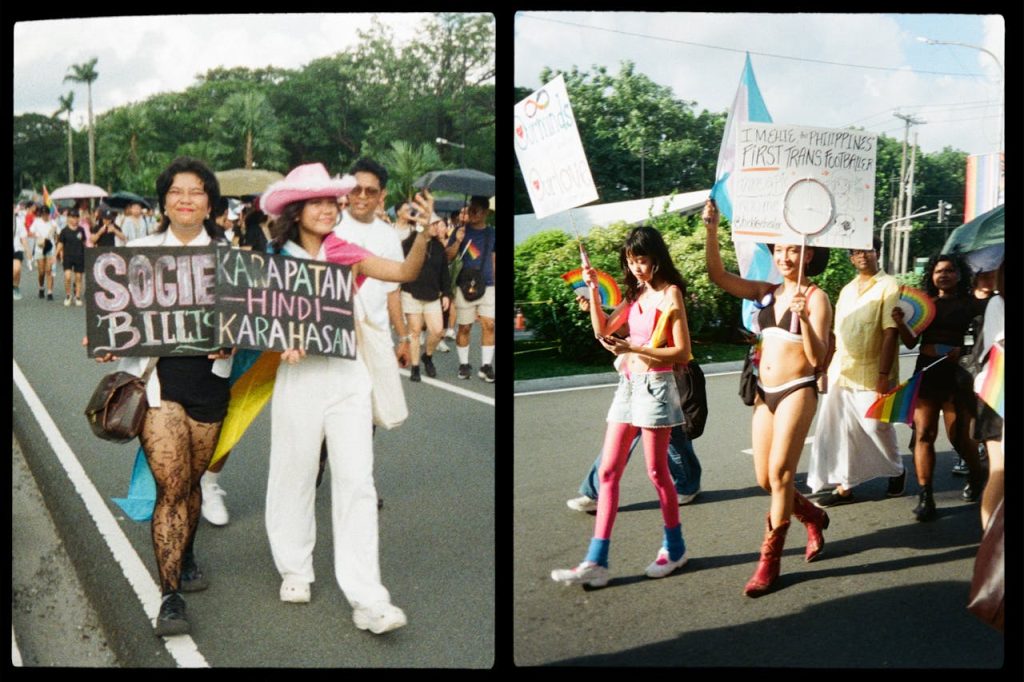
Photo: Pexels / Ruie Botron
“When a young bayot hears the term used with affection rather than contempt, a genuine psychological shift takes root,” Torres said. “The community’s reclamation is vibrant and effective within its own circle.”
But the fear now is that it will only ever be insular. Heterosexual spaces continue to weaponize the term, and most spaces still remain predominantly heterosexual. Search up any video with an effeminate man, and you’ll find the word sliming its way into its comments section.
“I’m glad there have been local efforts to help embrace the queer community,” Zac said. “But it still feels few and far between.”
On the national level, it appears more grim, with the SOGIE Equality Bill stuck in Congress for more than 25 years now.
“As long as a bayot can be openly and freely discriminated against without real consequences, the word retains its power to wound,” Torres said.