


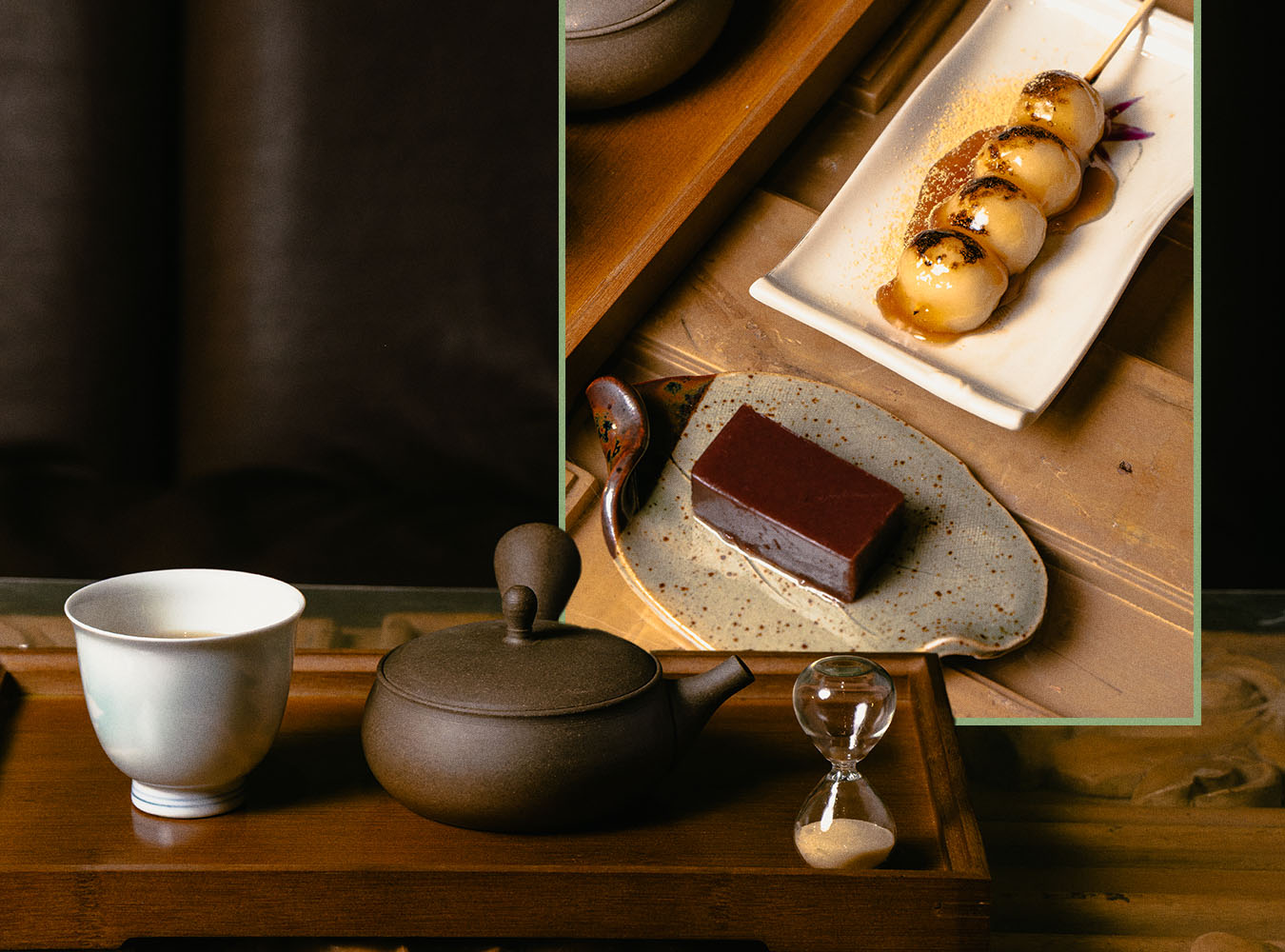
General Maxilom Avenue is, as usual, stifling and claustrophobic. The late afternoon rush hour presents a length of vehicles that stretch all the way to Osmeña Circle. The stagnancy of traffic has become an everyday dread. Tangina. You need a drink (Sike, non-alcoholic!); a moment to take back the time you’ve lost. Would you perhaps consider taking a little detour to somewhere not quite new?
Escape the highway and take a turn into M. Gotianuy St. Right across Puregold, past a paint-peeling gate, you’ll find an ancestral home with a wide, doorless entryway. Its antiquated structure almost makes it seem as if you’ve stepped into a vacuum where time has stopped—but look closer. A quietly beckoning light tucks away a little room within, glowing with rekindled warmth.
Chase the light. Step into Komorebi Tea Room: a space of reprieve, an invitation to pause, and a place of unwinding.
A new leaf
When you step into Komorebi’s doorway, you’ll spot a little nook that exhibits a variety of loose-leaf teas—a first glimpse into their tea-forward menu. And as you make your way towards the counter to make an order, the tea makers lined up right beside the cashier almost feel languid as they while with the tea preparation process. Measuring, steeping, brewing, whisking—every step is carefully executed albeit at a surprisingly unhurried pace.
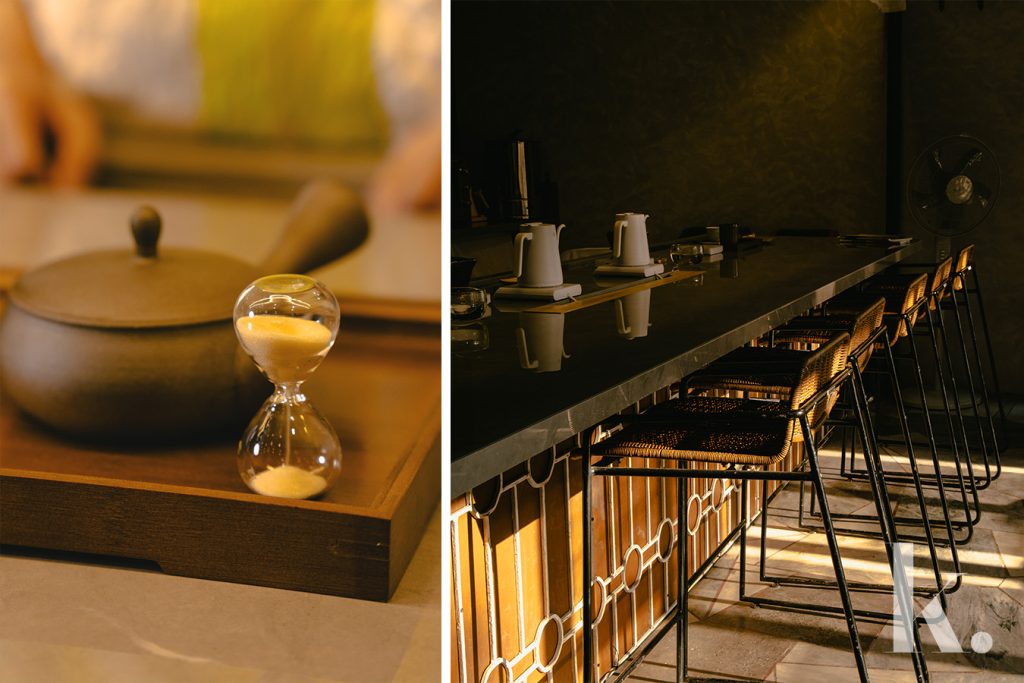
Whereas cafes and restaurants feel electric with overwhelming energy to meet every customer’s order for maximized efficiency, Komorebi exhales with you—the staff, the space, the ambience, leisurely and simply being present, that you can’t help but cushion yourself into that relaxation as well. And perhaps that too is efficiency that prioritizes quality over quantity.
For so long now, cafes have generally been versatile and accessible spaces people seek out for a multitude of reasons. Unwind or focus. Work or rest. Study or procrastinate. Social or solitary. And of course, dine and drink! But Komorebi positions itself as a tea room not to stand out, but to highlight the best aspect of cafes as spaces of comfort, while still embodying Cebuano practices and taking inspiration from Japanese values.
Just like home
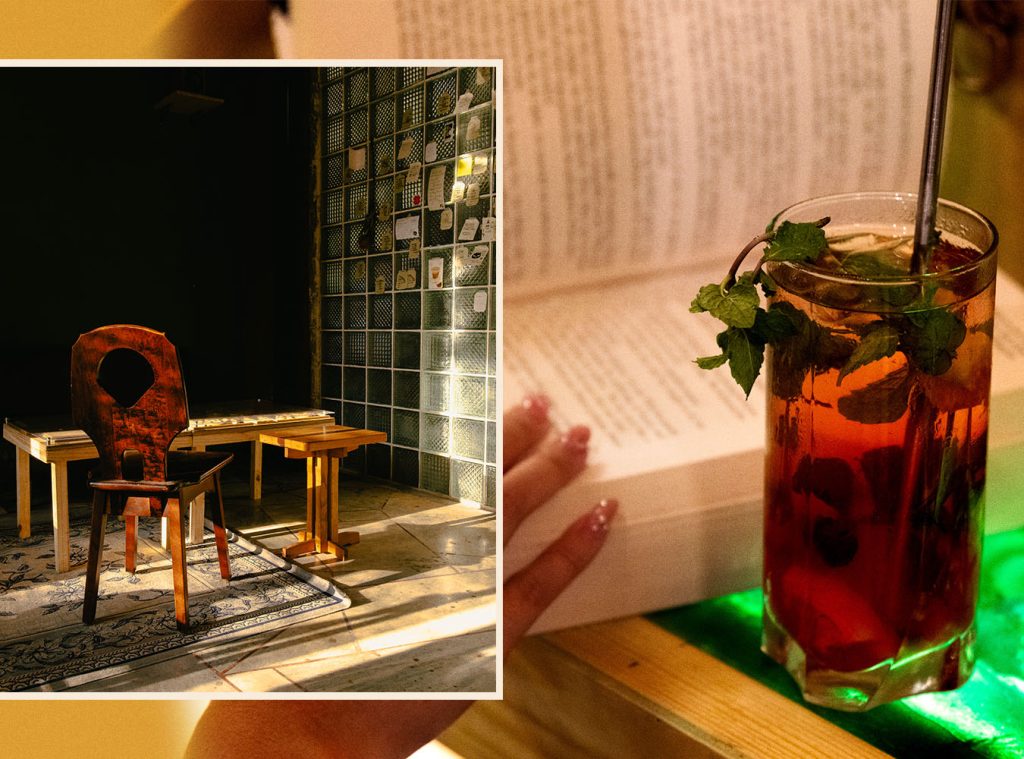
Thrifted chairs and sofas that seem like they’ve always been here, paint-chipped doors given new life as tea tables, and a generous number of windows to cradle the space in natural light. Komorebi eases you into its space not as a new experience, but is instead designed to greet you like a place you would (and will!) return to.
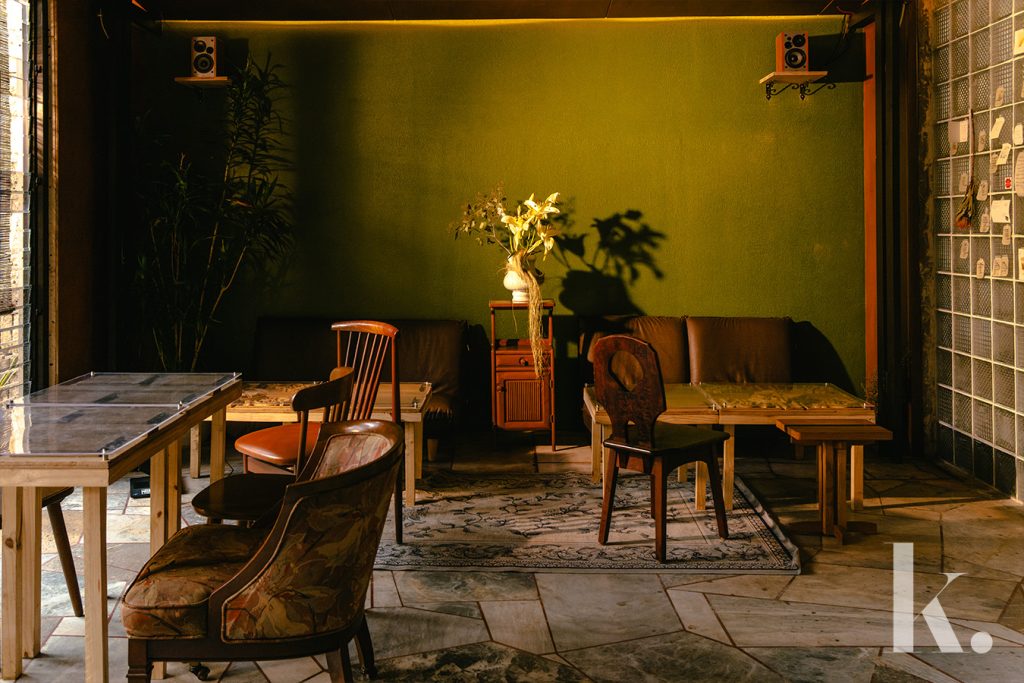
Komorebi is grounded and aware that it resides within an old Filipino-style house. Everything in the space has been meaningfully curated to be an interior that carries the impression of a welcome home after a long day.
When Komorebi’s architect and founder, Allen Celestino, found the abandoned home in the middle of Cebu’s busiest highways, he didn’t see a dilapidated structure that needed to be overhauled and squeezed in something new. Rather, the home spoke for itself: a place that once belonged to a family, a place worth cherishing. And what better way to translate that nostalgia than by adapting to the personality that the space already carried?
If memories had already been made here once, then they can be made again. And this time, shared between friends and family over tea time.
Simplicity and complexity
The kicker here, Allen admitted, is that he’s naturally a coffee person. No one, and likely least of all himself, expected to be starting up a tea room.
As an architect, Allen’s always on the move across different parts of Cebu every day. Each day is a blur of projects, meetings, and site work. Regardless of profession, the average Cebuano can relate to the dizzying pace of a weekday in the city, and such action-packed work days (and don’t even get us started with traffic!) often lead to the necessity of coffee for that energy booster to get through the day.
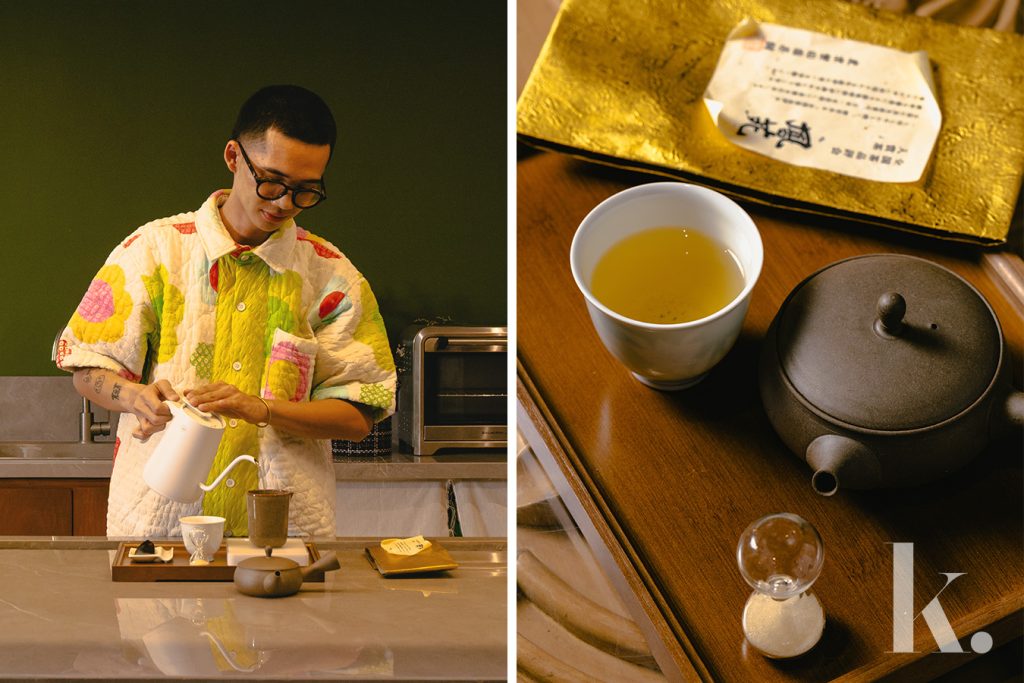
Allen’s interest in tea wasn’t love at first sip. He recalled how matcha hadn’t even been palatable to him. Rather, the spark for that love was actually a cup of Japanese sencha. He was intrigued by the depth of tea when prepared properly, and how its complexities stretch beyond just the standard tea packet.
Brewing tea is unassuming at a glance, especially when the average tools required can be found at home. A mug, a thermos, a tea bag at bare minimum. But Allen advised paying more attention to the little details that involve tea preparation, and the same tea composition transforms when you allow yourself a hint of more care into your drink. Aromas that range from floral to earthy, the astringency of tea laced with natural sweetness or savory umami, and how mouthfeel changes depending on the duration it was steeped.
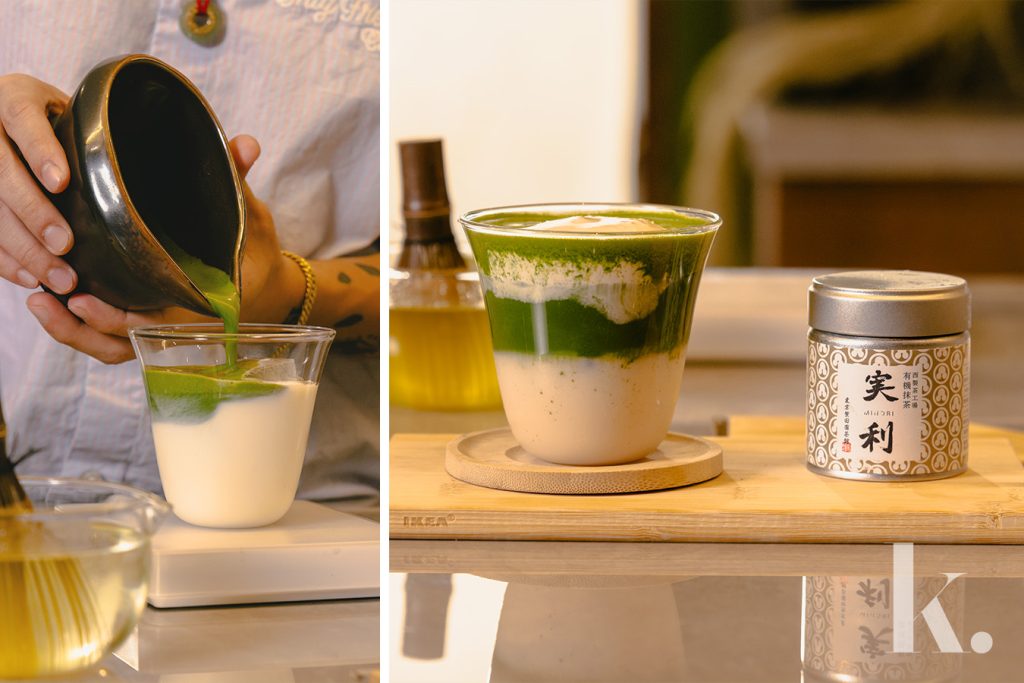
But what truly made Allen begin to appreciate tea is how it asks you to wait. What came with the discovery process of the tea ritual was the realization that tea is as versatile as it is because of the simple virtue of patience. Slowly but surely, as he experimented with different selections of loose-leaf teas and how each sip evolved after the next, he began to appreciate how tea brought his fast-paced days into focus. Taking a moment to pause, brew his sencha, and another to enjoy the experience of sipping and relaxing.
Nowadays, Allen likes to recommend sencha to peers and customers at Komorebi. With the rise of matcha across Cebu, he’s confident that this will be the gateway for more people to try Japanese tea—and perhaps learn to love it as much as he does.
An occasional coffee cup still helps speed through those long days. But tea became Allen’s reminder that each moment that passes should be intentional and worth appreciating.
Step back into your moment
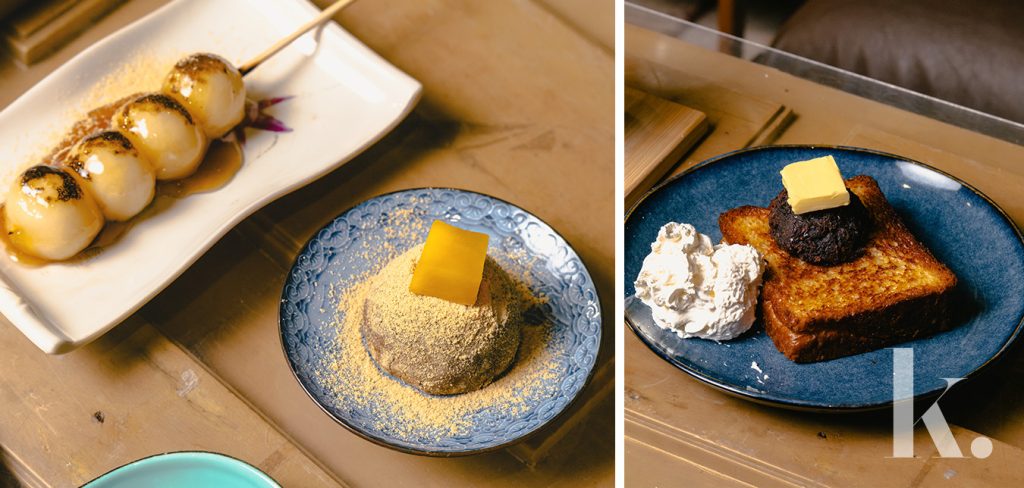
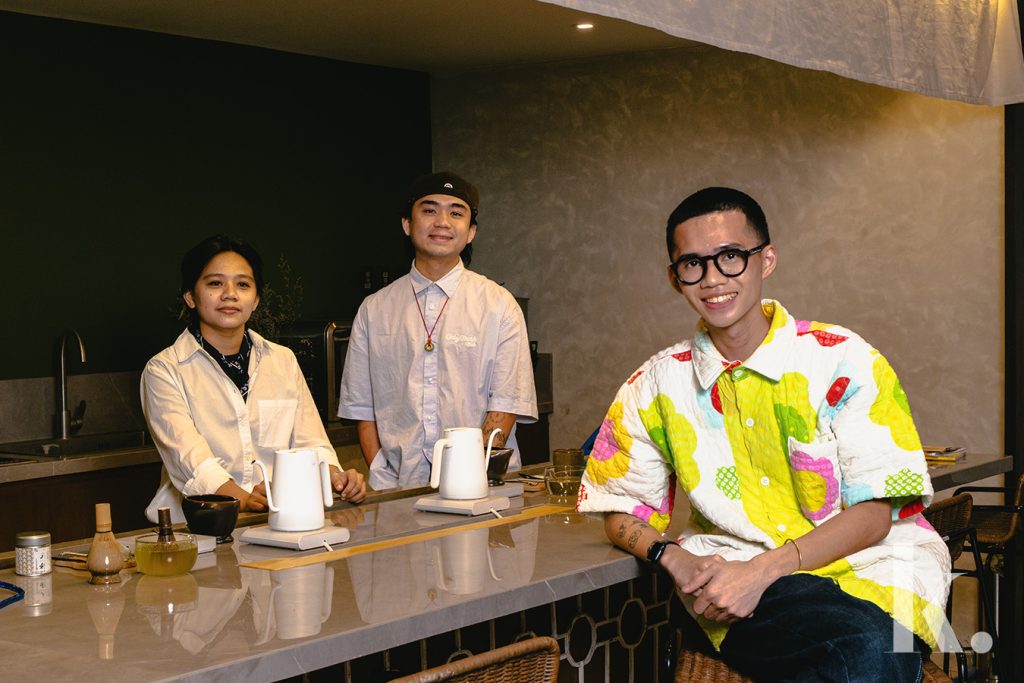
Komorebi soft-launched its doors to the public last August. For this quaint little space that hides away from the bustling city, its journey has only just begun. Together with his brother Ram and Lii Cogal, Allen is still constantly discovering and experimenting with ways he can expand Komorebi’s tea catalogue and food menu. He welcomes anyone curious about tea to discover its transformative properties, or if they simply need a space to pace themselves and take back their time.
Komorebi Tea Room is open from Tuesday to Sunday, and closed on Mondays. Operating hours are between 12:00 PM and 8:00 PM. Find them on Instagram at @komorebi.tearoom.
Photography Kyrra Kho













One thought on “Here’s the Tea: Local Tea Room Owner Actually Prefers Coffee”