

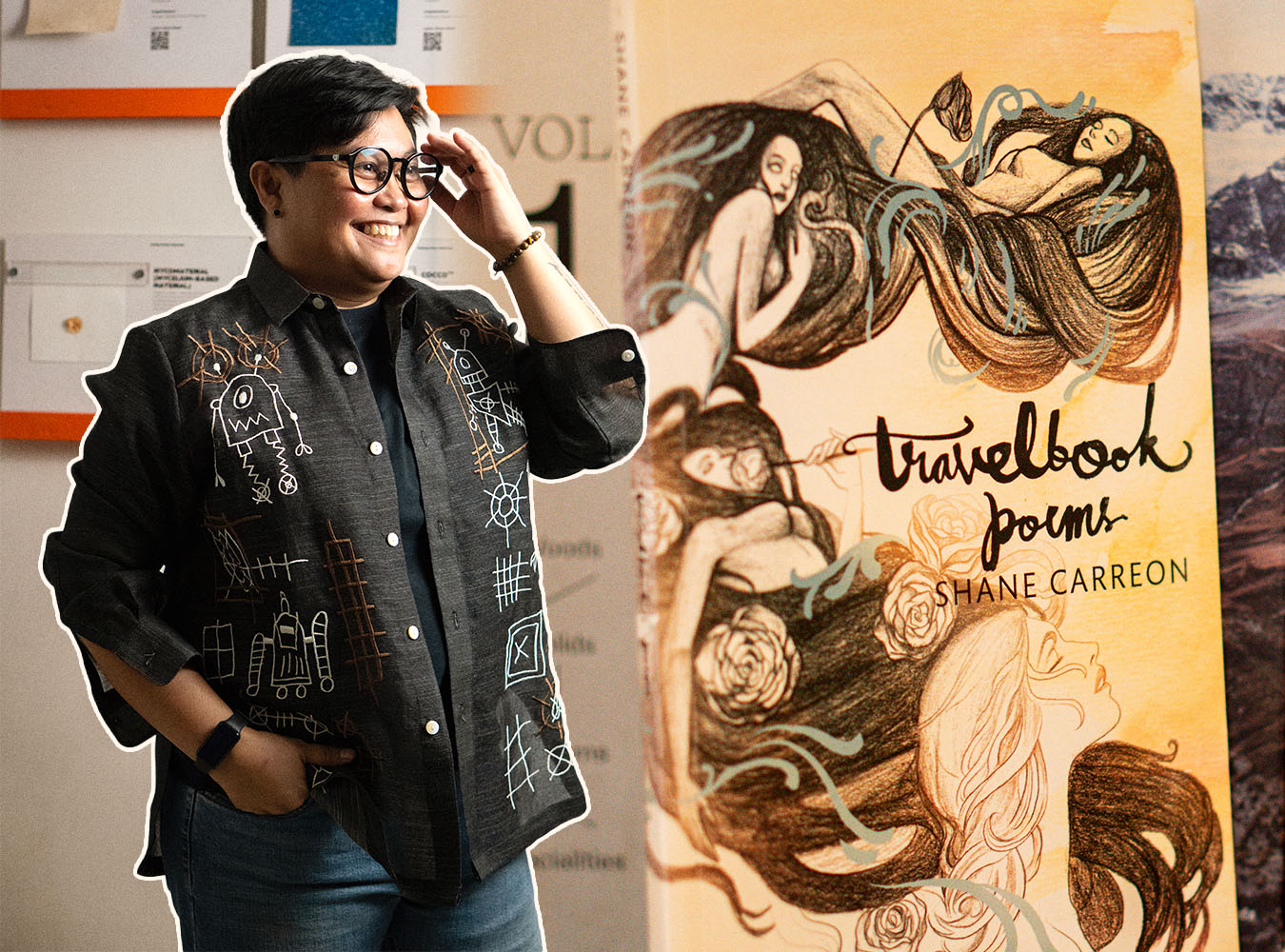
Most people think of the wilderness as a place without direction, but it helps others learn more about themselves through its isolation. For the past ten years, award-winning Cebuano poet, scholar, and educator Dr. shane carreon has expressed this sentiment in his writing to better understand himself in the world.
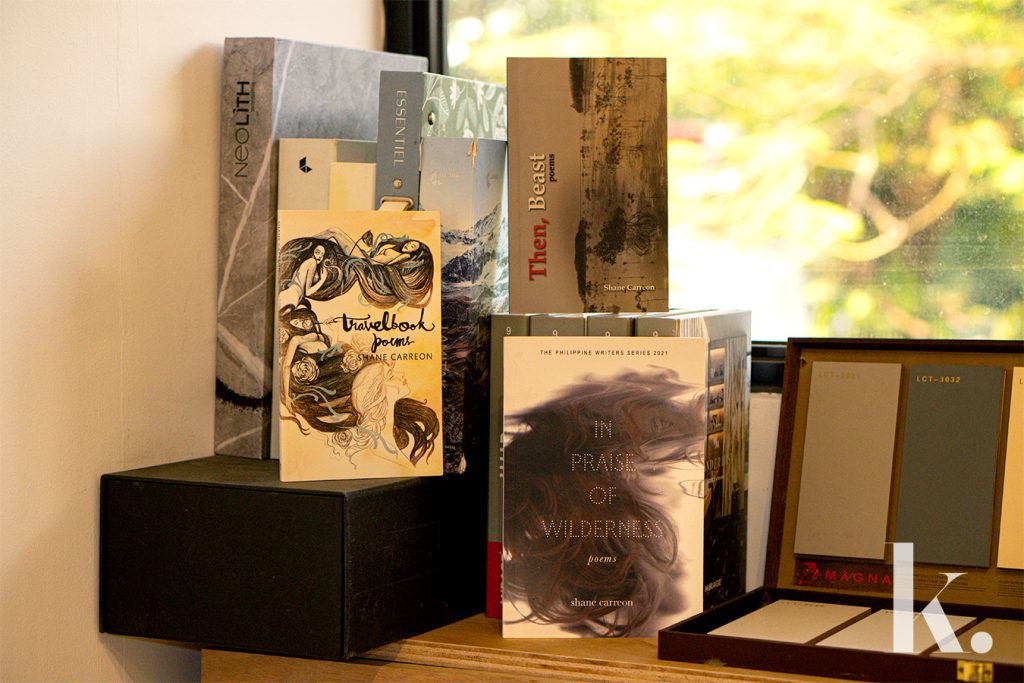
Through his three poetry collections published by the University of the Philippines Press, travelbook (2013), Then, Beast (2017), and In Praise of Wilderness (2021), carreon shares his journey of self-discovery as transmasculine and how he has come to understand voice, memory, and belonging.
“Writing was a way to express things. I found there are things that I could write about that I wasn’t very comfortable talking about,” he said.
For him, poetry is more than just a record of experiences. He believes it allows him to imagine new forms and express truths that are not easy to share in daily life. Growing up in a conservative environment, where words like “queer,” “transgender,” and “transmasculine” were not yet part of popular consciousness, “lesbian” became a way for him to be understood by others.
He wrote his first poetry collection, travelbook, in 2013 while studying for his Master’s degree in Creative Writing at UP Diliman. In “Notes on This Travel” from travelbook, he shared that the word “lesbian” was hard for him to write. He wished he could have used a different word.
“The word lesbian was a way to be understood, so I would be understood,” he mentioned.
Publishing travelbook was a coming out for him. “The collection contained poems about meeting a lover, losing a lover, meeting the parents of one’s partner, and even imagining what it would be like growing old with one person whom you like,” he stated.

Soon after travelbook, carreon went through an unexpected writerly crisis. For most of his life, words have always run through his mind. He often heard phrases, images, and lines, like a familiar soundtrack that fueled his writing. But then, all of that suddenly “disappeared.”
“After the first collection came out, I couldn’t hear a thing. And I’m not sure I can describe it well enough for you to imagine what it’s like to go ‘deaf.’ Like, I can hear you, but I don’t hear the buzz of words,” he recalled.
This fear pushed carreon to write Then, Beast in 2017, a second anthology about uncertainty, creative anxiety, and what happens after a major personal discovery.
“And sometime in the writing of that second book, I came to realize that the reason I really don’t feel like myself being called lesbian is that I wasn’t one,” he pointed out.
It took him some time, after studying in New York, to publish his third collection in 2021. “By the time I came out with the third book, I was already sure of myself. And I was braver, I was more confident,” he said.
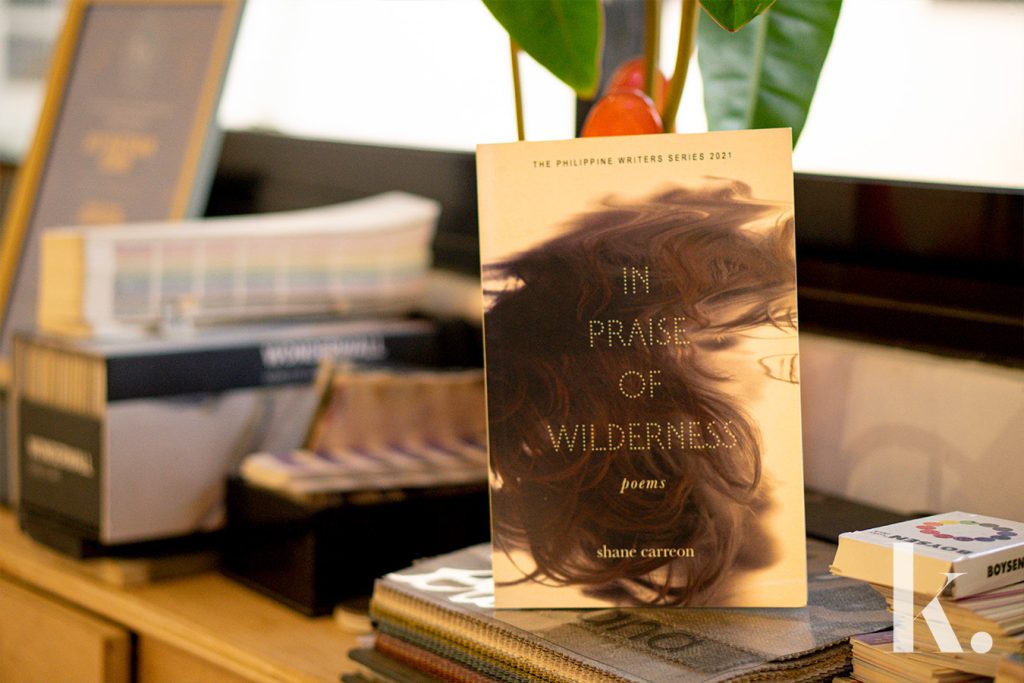
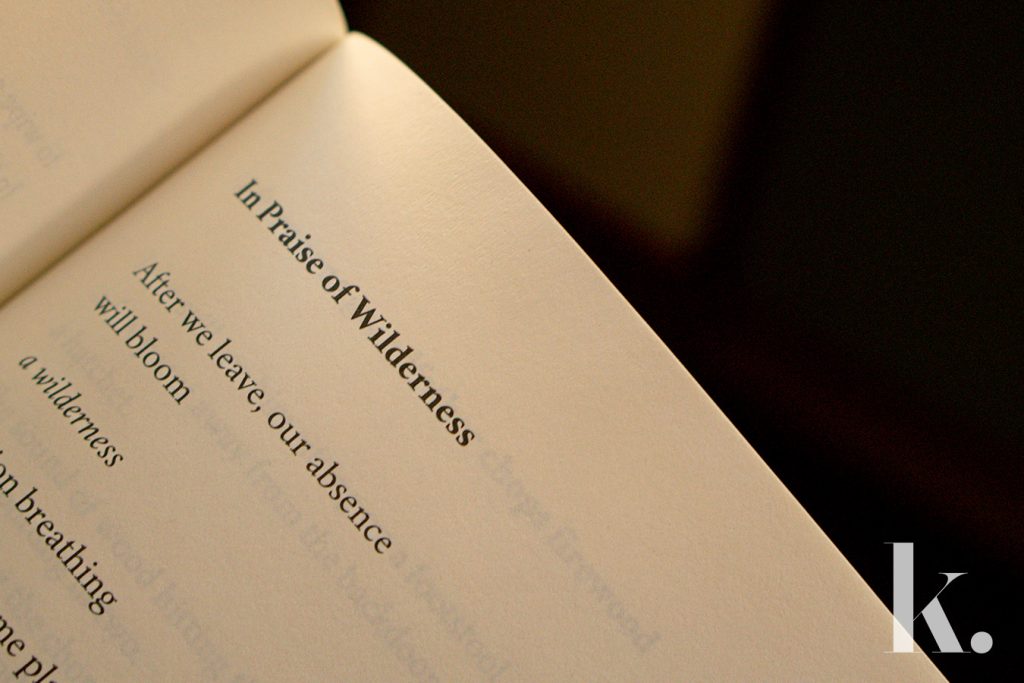
This third book, In Praise of Wilderness, explores his coming to terms with the past, historic, cultural, and personal things carreon was unsure he could talk about when he was younger. “Living is a form of wilderness. Life is a form of wilderness we have to navigate our way in, within, and through,” he explained.
Some poems in the third collection are based on carreon’s personal experiences, such as the poem “the first boy” to honor a friend whose passing he learned later in life. “It’s a memory that was very strong. It doesn’t necessarily have an ending; it’s just is. How do you come to terms with that? You don’t come to terms with that, there’s no resolution to it,” he emphasized.
carreon also wrote a poem about his experience as a brown transmasculine in New York. One moment that stood out was during a visit to the Metropolitan Museum of Art, where he saw objects once revered by ancestors now displayed as museum artifacts.
“Those are real gods that were highly regarded by peoples, but they’re just there, being turned into a spectacle. Those things resonated in a complex way about identity, gender, displacement, coming to terms with memories, and family,” he recalled.
In Praise of Wilderness also marks a significant moment for carreon because he chose to use pronouns that truly reflect who he is.
On Ambiguity, Meaning, and Theory in Poetry
carreon believes poetry can achieve things that other forms of writing cannot. “I think much of the power of a poem is from the way it can be ambiguous, and it can come in many forms,” he said.
Poetry, unlike essays or academic writing, can carry several meanings at the same time. “Sometimes a poem means more to someone who has experienced more and can understand its subtle messages, or even see the poem itself as the message. Other people, because of their own experiences and limits, appreciate a poem differently,” he continued.
This kind of ambiguity reflects carreon’s life as a transmasculine moving through different social spaces. “Most of the time, poetry works best when it is ambiguous. That is similar to how I live in this world, where you are understood in different spaces you move through. For example, on campus and with certain friends, I can use the pronouns: he, him, his. But in other spaces, for me to be legible, I have to live with being called otherwise. And it’s like poetry then,” he recalled.
He said that the power of poetry comes not only from its meaning, but also from its sound, rhythm, form, and the feelings or sense it creates. “I write poems to find my way in the world. It is a form of reflection and contemplation. And it settles me,” he stated.
While poetry remains central to his work, carreon also writes essays and scholarly criticism. He sees all these types of writing as interconnected in his exploration of gender identity and sense of being-in-the-world.
“When I use the long form, it accommodates explanations and longer time frames…. the span of a lifetime, the span of a year, you go back and forth,” he said.
When he talks about being a scholar, he sees reading theory as a way to better understand the world. carreon articulated, “Theories are forms of reflection that people have arrived at.”
He explains this by likening theory to a lighthouse that guides someone through darkness. If you are traveling through unfamiliar territory at night, the lighthouse shows you a way that has already been made.
carreon has always seen theory as crucial for helping us sense our being-in-the-world. “And yes, they do inform the poems, they inform the essays because they inform the person who writes them,” he added.
Advice for Young Queer and Trans Writers
For carreon, writing is a transformative act. He believes you are not the same person after writing a poem as you were before. “Because I think, writing has to be… You have to give yourself permission. You permit yourself to allow yourself to say it,” he said.
He reminds young queer and trans writers that their writing is always important, even if no one else sees it. “And there are many things we don’t allow ourselves. And if we take away the requirement, the obligation, the pressure that things have to be published, we can be more authentic. We can be more authentic with our writing,” he advised.
carreon also enunciated that young people today are lucky to have words like “trans”, “transmasculine”, “transgender”, “queer”, and “non-binary.” These terms can help one understand oneself. He didn’t have these words when he was growing up.
“You find what truly is essential. You can find it in the process of writing. Sometimes you don’t even know the essential until the poem has been written,” he shared.
When asked which poem best represents him, carreon says it’s hard to choose just one. He feels that while no poem is only about the writer, every poem is still of the writer’s own experiences and sense of being-in-the-world.
“What is written in poems is not facts. They’re the truths of the writer,” he remarked.
As carreon plans to publish more poetry collections in the future, he keeps this idea of truth in mind when writing about life. For him, good artworks always express a feeling or truth that readers can connect with, even when some details are changed.
Photography Dorothy Pradas