

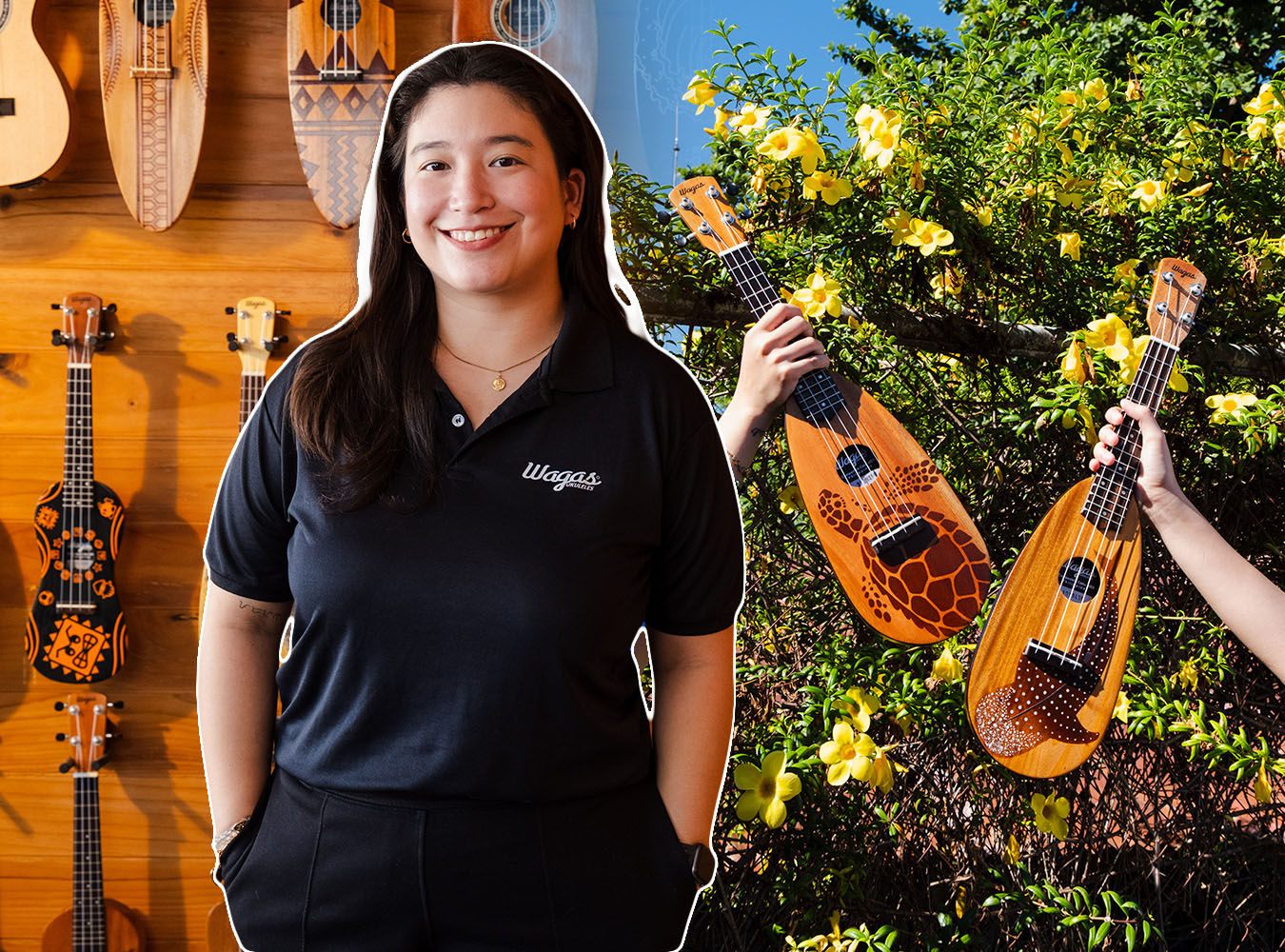
You can rest the wavy edges on your lap; it won’t hurt. The paint on the fretboard won’t chip even as you slide your fingers on it. Carry it. It’s lightweight, isn’t it? You can bring it around with you to places where songs are needed the most — weddings, beaches, road trips.
It is this attention to form and feeling that makes Wagas Ukuleles distinct. You’ve probably seen their work around malls, museums, and even airports — unmistakable in their vibrant colors and unique shapes. Their instruments are characters in and of themselves.
The local ukulele maker has already carved its name into the distinctly Cebuano tradition, and it’s keeping the enduring beauty of the instrument exciting and alive.
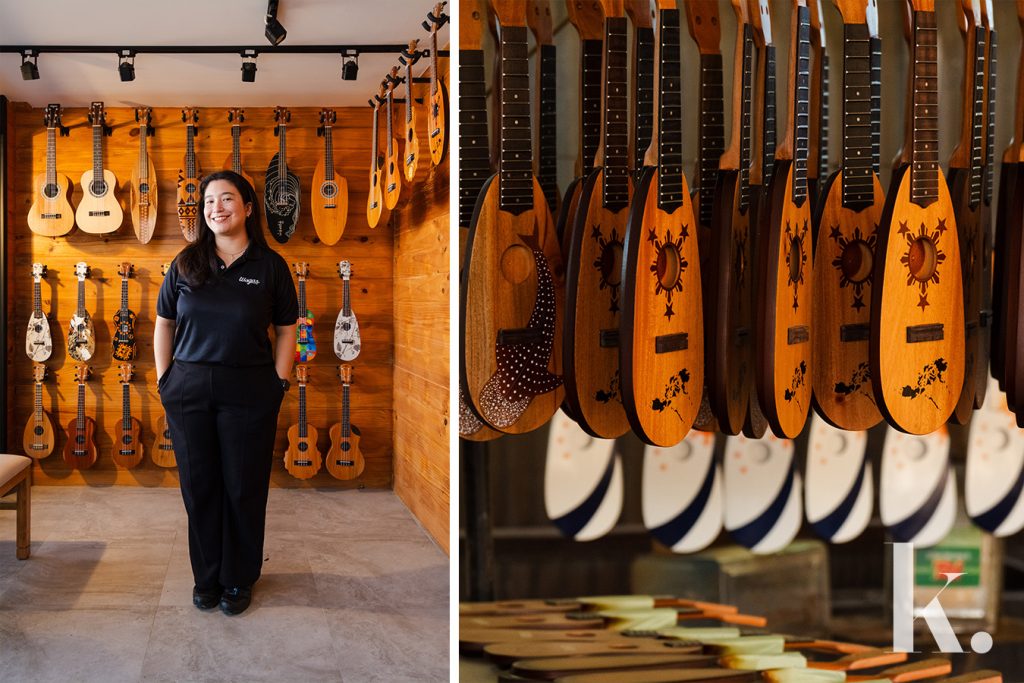
What does it take to make a ukulele?
For Ritchie Wagas, it took a trip to Hawaii.
On a family vacation to the island state, he stumbled upon a ukulele shop that sourced their ukuleles all the way from Cebu.
“Even when we meet fellow Filipinos abroad and say we are from Cebu, many would immediately say, ‘Ah, guitars,’” shared Ulrika Wagas, Ritchie’s daughter and Wagas Ukuleles’ managing director. She was there on that fateful Hawaii trip when the idea of crafting ukuleles flickered in her father’s mind.
Realizing that Cebuano craftsmanship had the potential to travel the globe, her father spent years of his life researching, conceptualizing, and crafting what would become their signature ukuleles.
“A lot of the process begins with him seeing a real-world object or shape and imagining how it could become a ukulele,” Ulrika said.
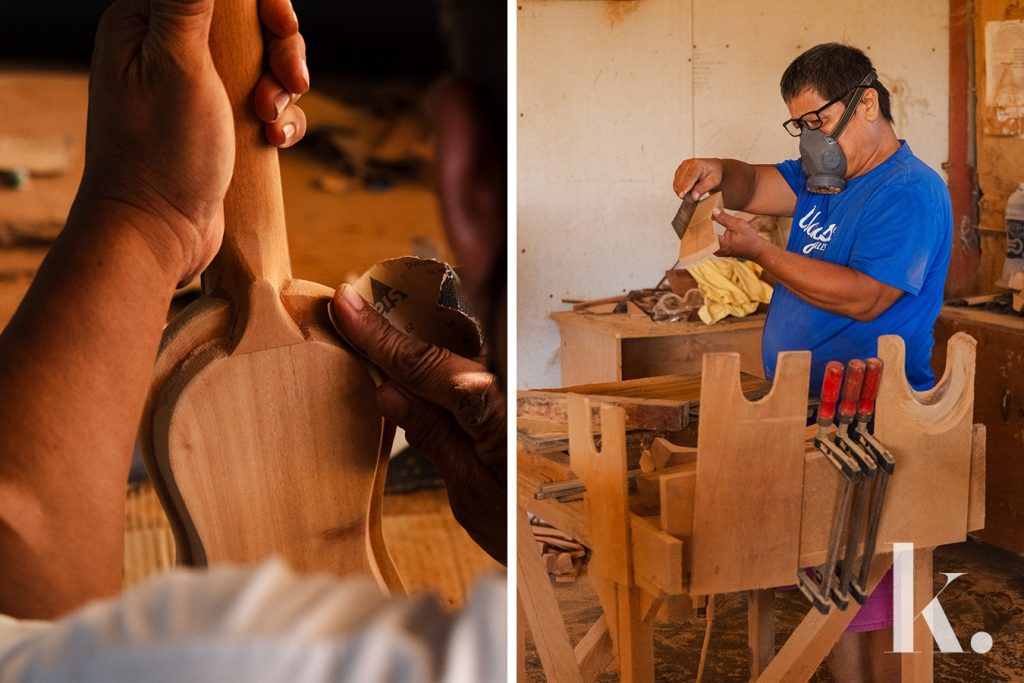
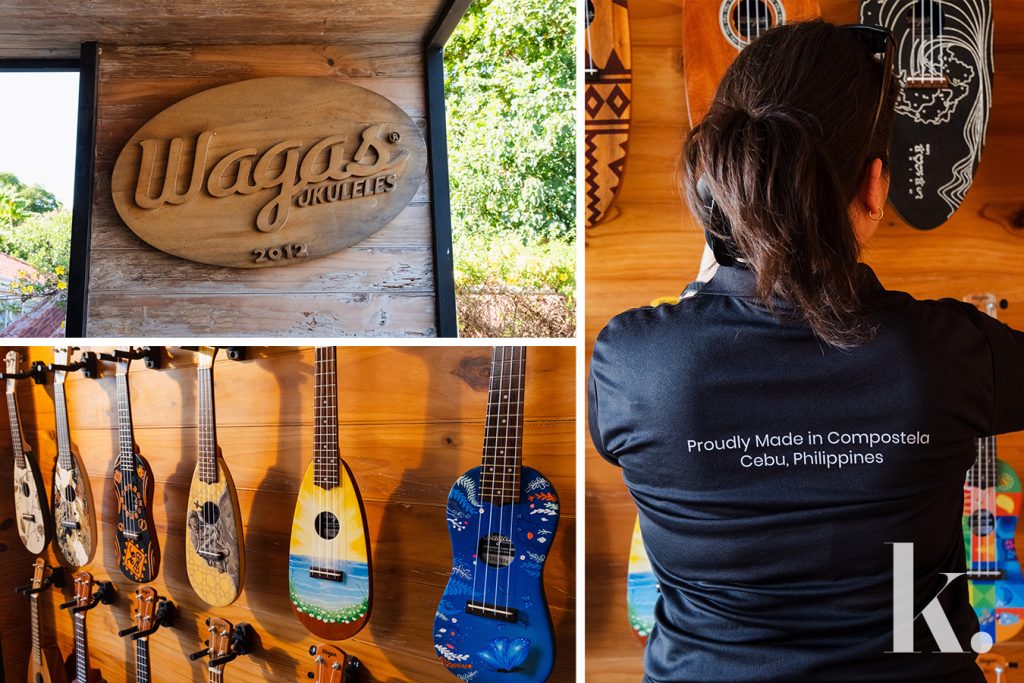
While each ukulele is designed solely by Ritchie, it takes a whole village to bring his vision to life, particularly one in Compostela. In that coastal town in northern Cebu is where their workshop is based. Some of the luthiers and artisans on their roster have been with them for almost 25 years.
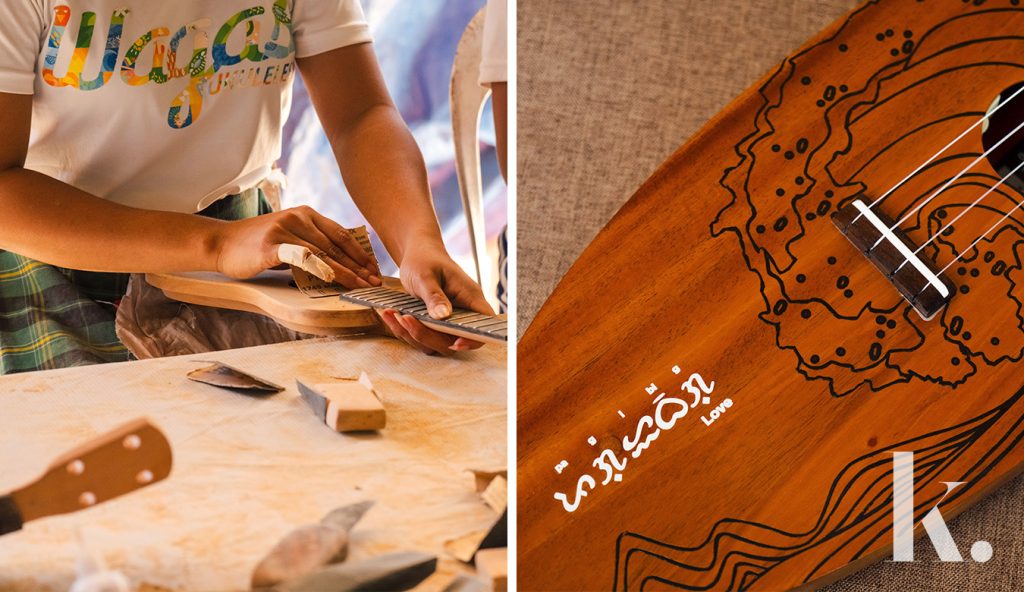
Every piece is handmade, yet crafted with laser-sharp precision. Unlike traditional ukuleles, where thin wooden sides are heated and bent to form the body, the luthiers of Wagas Ukuleles shape the instrument’s body from a solid block of mahogany.
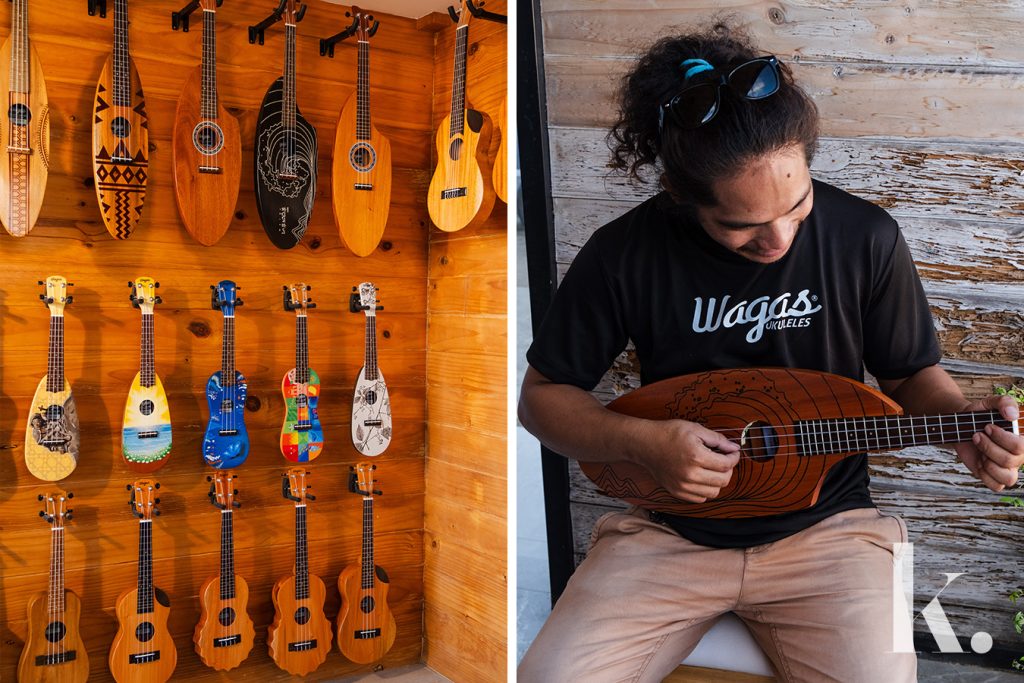
This process allows them to be playful with shapes, which is a risk. The resonance and volume of the instrument that we all know and love can be credited to the ukulele’s figure-eight shape. Even small changes can alter the listening and playing experience.
But if you ask anyone, for Wagas Ukuleles, the risk paid off.
Going against the grain
In a discussion about Ulrika’s favorite ukulele designs, their Kudyapi Ukulele is among the top.
The kudyapi is a long-necked two-stringed lute native to Mindanao and Palawan, where one string produces a melody and the other a drone, creating a hypnotic, layered sound. Ritchie reinterpreted the unique shape into a ukulele and donned tribal tattoo-inspired artwork on it.
Their interpretation of the piece reached a mountain village in Kalinga province, where legendary tattoo artist Apo Whang-Od learned to play a C chord on it.
“It felt like a full circle moment,” Ulrika gushed. “And a beautiful reminder of how Filipino creativity can live through different forms.”
If a great artist like Whang-Od can hold one of their ukuleles, then why can’t one of their ukuleles hold a great work of art?
In collaboration with the National Museum of the Philippines, Juan Luna’s masterpiece Spolarium found a home in a limited-edition travel ukulele. Wagas Ukuleles made only three of these, all of which have been sold.
“Profound” was how Ulrika described the process of making this particular piece. “It brought together Filipino art, history, music, and craftsmanship into one instrument,” she said.
The care Wagas Ukuleles puts into each product extends to how they source their materials.
In a Reddit post, one commenter asked whether they have experimented with mango wood for their ukuleles. Once, they responded to the commenter, and it was good, but they don’t plan to do it again.
Ulrika expounded on this: “We did not want to create a demand that would encourage cutting down trees like mango just for the sake of making ukuleles.” They commit to making full use of the wood they work with, employing earlier techniques to turn scraps and offcuts into souvenirs and craft pieces.
Knocking on wood
Looking forward, Wagas Ukuleles hopes to continue exploring the ukulele as an art canvas, just as they did with Spolarium.
“For us, it is not only an instrument. It can also be a space where Cebuano creativity can shine,” Ulrika said.
Even with the unique character of each ukulele, the act of playing remains universal. Ulrika’s favorite thing about the instrument is that it is “not limited to one age group”: parents buy it for their kids; grandparents pick it up as a hobby; schools weave it into their curriculum.
As long as you have an itch for delicate harmonies, you can pick up a ukulele from Wagas Ukuleles and simply strum on.
Photography Kyrra Kho